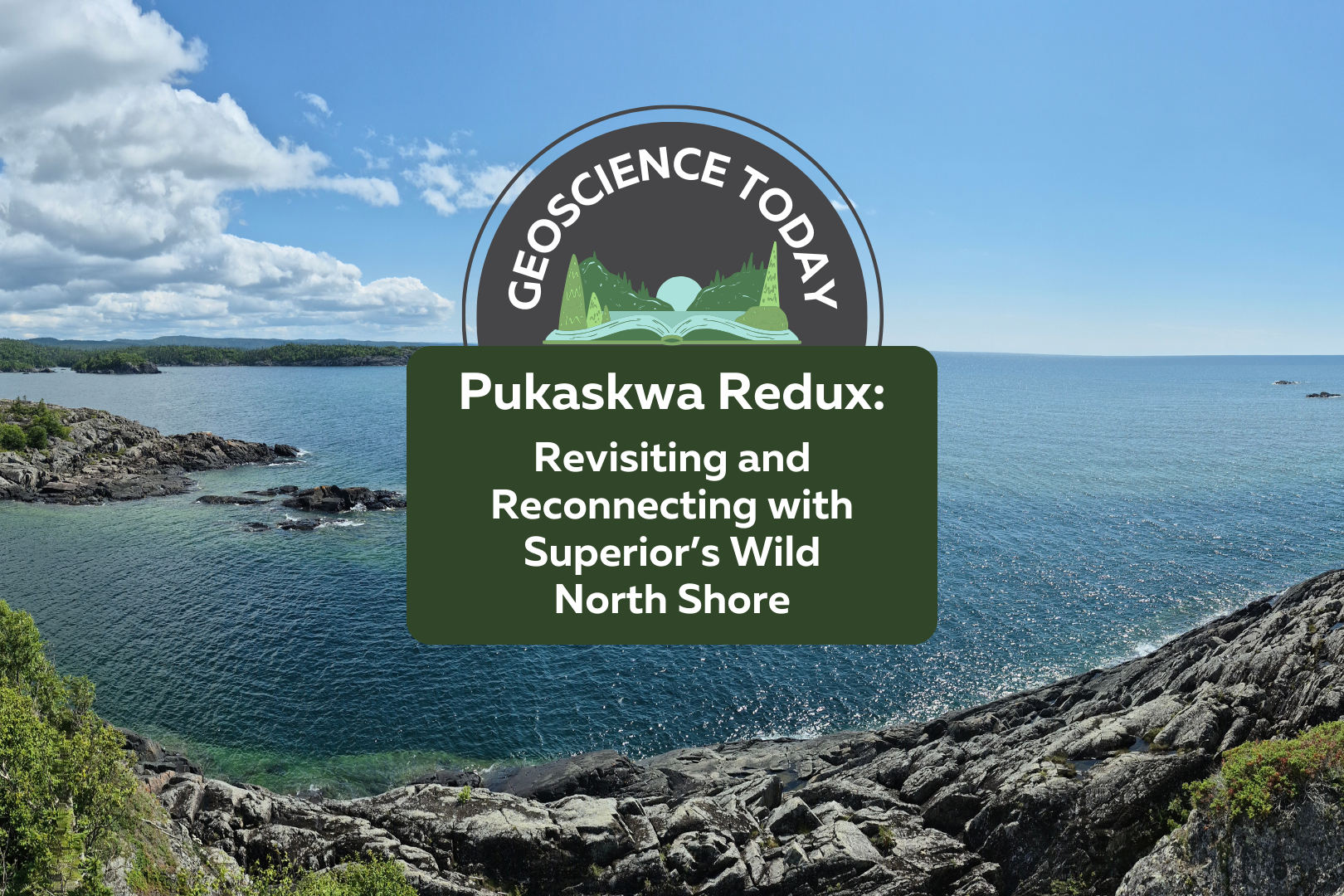
Pukaskwa Redux: Revisiting and Reconnecting with Superior’s Wild North Shore

Mark Smyk, M.Sc., P. Geo. From August 11-24, 2025 I had the pleasure of serving as the Canadian Federation of Earth Sciences (CFES) and Parks Canada’s fourth Geologist-in-Residence (GIR) at Pukaskwa National Park. I worked closely with Carly Robillard, Pukaskwa’s Interpretation Officer and Coordinator to deliver geology-based educational experiences to Park visitors and Parks Canada staff.  I was encouraged to apply for Pukaskwa’s GIR Program when a number of my friends and colleagues on Facebook forwarded me the Call for Applications. It would provide me with an opportunity to revisit and reconnect with the Park and that stretch of Lake Superior shoreline where I had worked for over three decades. It had been almost twenty years since my last visit to the Park – a field trip that Tom Muir and I co-led for fellow Ontario Geological Survey (OGS) geologists. (Tom had mapped this area for the OGS in 1977.) I had first worked in the area in 1983 (the same year that Pukaskwa officially opened), based in a tent camp 3 km east of the Visitor Centre, a young geologist employed to look for gold during the height of the Hemlo rush. A few years later, I began my career with the OGS and had the good fortune of visiting the new Park and marveling at its geology. You could argue that the Park’s geology isn’t unique – similar rocks occur elsewhere along the North Shore – but they are rarely exposed as well as they are in Pukaskwa. With that in mind, I began to prepare for my long-overdue return to Pukaskwa, eager to share my passion for the local geology. I was eager to revisit spots I had fondly remembered from my earlier visits. I hiked the four front-country trails (Beach, Southern Headland, Manito Miikana and Bimose Kinoomagewnan) and walked the main access road, describing, photographing, and geo-referencing geologic features. Some of these sites would later be featured on subsequent Guided Hikes/Walks on the Southern Headland and North Beach trails. I hope to compile all of the collected site descriptions to form the basis of a self-guided, geology field trip guidebook that could be provided to future GIRs, Park staff and visitors.  It was a busy two weeks at Pukaskwa! My visitor-based activities included: While these formal activities involved over 200 participants in total, I had many other informal conversations as I hiked throughout the Park, with both new and returning visitors. Fellow geologists, professional photographers and educators were among those I met who came to hike, camp and enjoy all that the Park has to offer. The Drop-In sessions invited visitors to try a variety of activities that demonstrated the properties of minerals and rocks, and how those properties help us to identify them and utilize them in everyday life. There was much interest in “Yooperlites”, fluorescent sodalite-bearing syenites from near Marathon that are found as beach pebbles in Ontario and Upper Michigan. Interest in these rocks has not waned since they started making headlines in the United States almost ten years ago. I collected some of this syenite from a rock cut on Highway 17 and gave some keen visitors pieces to take home. Drop-In Session near Visitor Centre, showing table with rock and mineral samples, books and maps, as well as a gold panning station One of the many pleasant surprises during the Drop-In sessions was the visit of Robin Heron, Pukaskwa’s former Park Manager, with whom I had worked on a regional steering committee in the 1990’s. It was great to reconnect with her after 30 years and reminisce about our time together back then! I also saw a few familiar faces on my last Walk and Talk. Friends from Thunder Bay and Terrace Bay made the trip to Pukaskwa just to take part in this event. Two members of Science North’s “Bluecoats” visiting outreach team also took part and shared enthusiastic messages and photos with other members of their team while they were on the walk! I had the good fortune to connect with Park Guardian, Binaeshee-Quae, and seven other community members from nearby Biigtigong Nishnaabeg First Nation who had questions about Grandfather Stones and selecting locally sourced stones to be used in sweat lodges. The conversation was fluid, touching upon local geology, mining history and other subjects. I let them know that they could contact me should they have any follow-up questions or require any information in the future. Photos taken by members of the Science North’s Bluecoats during the Walk and Talk on North Beach (photos courtesy of Emily Kerton, Science North) My time as Pukaskwa’s GIR was thoroughly rewarding for a number of reasons. It allowed me, after a great many years, to revisit an area that I had always enjoyed exploring and working in. I was able to interpret and document the varied Park geology and discover new things along the way. It gave me the opportunity to share my passion for geology with a wider audience and reconnect with friends and former colleagues. I was also able to introduce Pukaskwa to my family, who want to return in the near future. I hope that everyone that was involved in the 2025 GIR program – organizers, staff and visitors alike – gained something from the experience. I know I did. Thank you, all! Merci! Miigwetch!  In closing, I’d like to share a poem I wrote some years ago that was inspired by my time on the North Shore. I think it is a fitting epilogue to my time at Pukaskwa.  Our land bears silent witness of all that has come before billions of years of creation and destruction darkness and light ever so slowly, changing still. A fragile crust formed by fire cooled by primordial rains worn away to dust by wind and water and time. Quiet, ancient seas belied the unceasing turmoil below tearing apart this rocky shell leaving ice and the Lake to heal its fiery wound. Water upon rock time and again.
Read More »
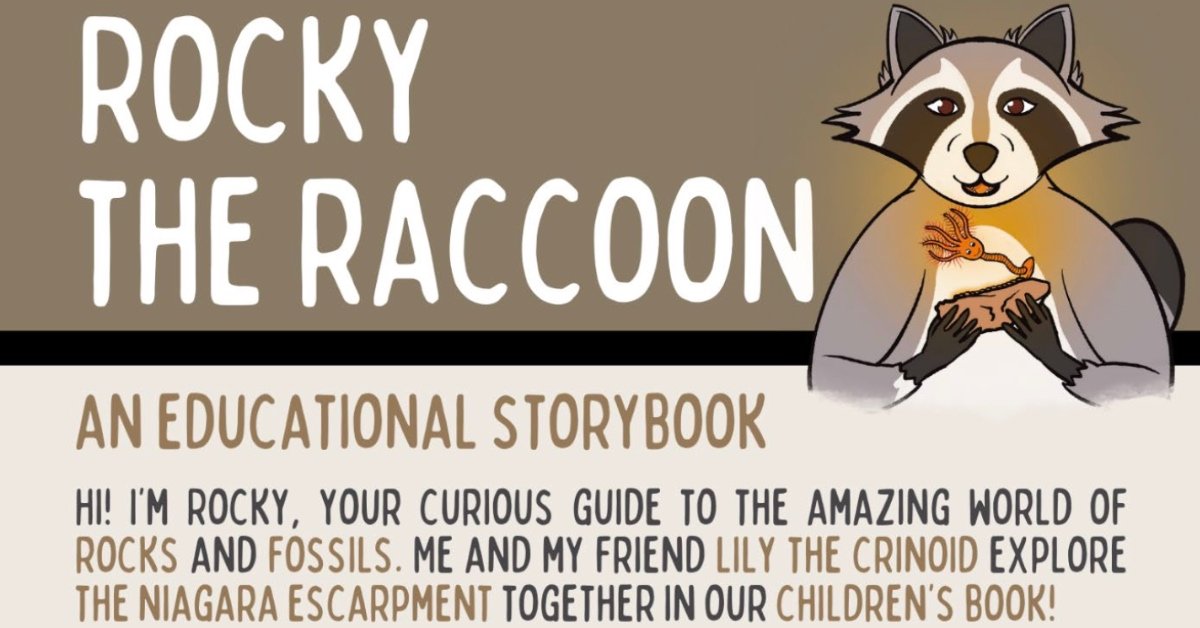
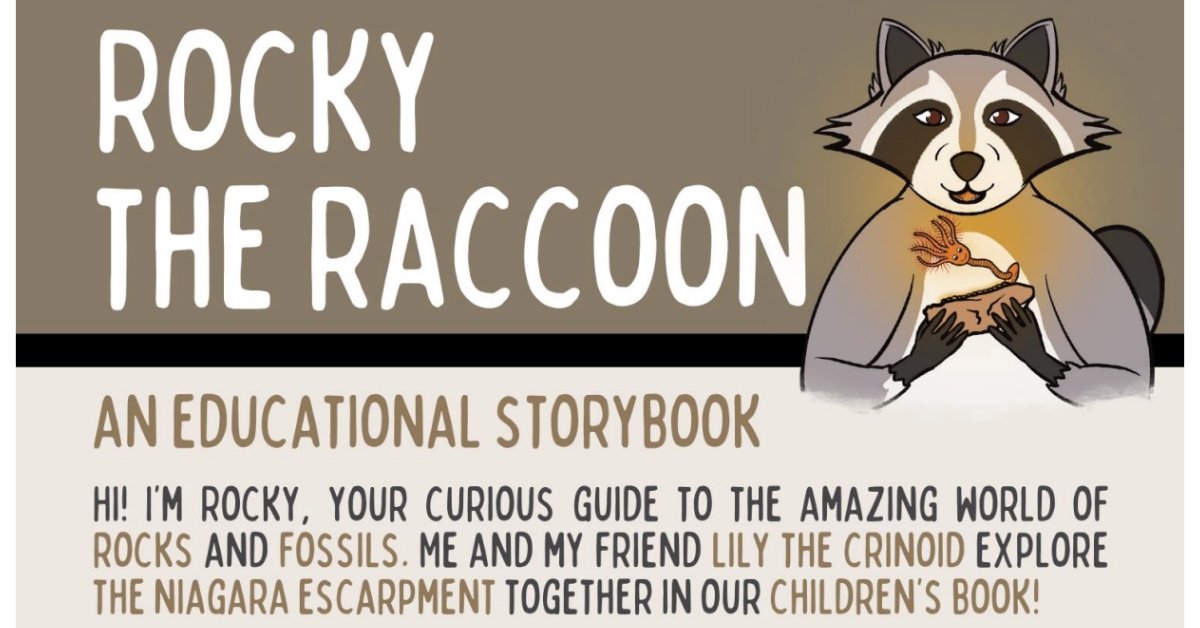
Rocky the Raccoon poster.

Dr. Katie Maloney to Present Poster – Rocky the Raccoon: An Illustrated Children’s Book Series for the Next Generation of Geoscientists at the Geological Society of America Annual Meeting in San Antonio, Texas on October 22, 2025

Dr. Kate Maloney, P.Geo., principle author of our children’s book “Rocky the Raccoon Explores the Niagara Escarpment” will be presenting a poster entitled “Rocky the Raccoon: An Illustrated Children’s Book Series for the Next Generation of Geoscientists” at the Geological Society of America.

Read More »
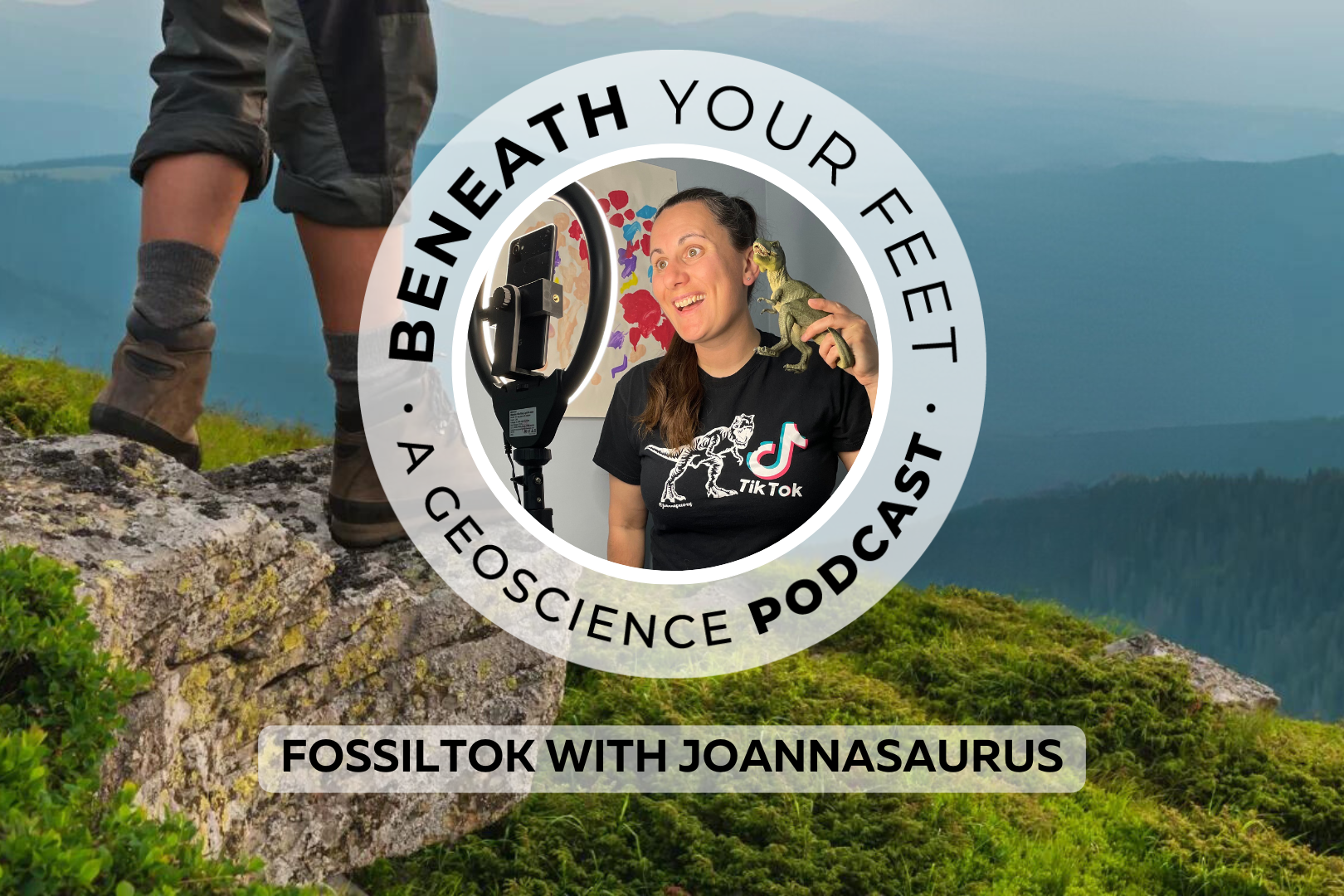
Headshot of Joanna Northover over image of a hikers boots and mountain landscape. Text reads: Beneath Your Feet. A Geoscience Podcast. FossilTok with Joannasaurus.

FossilTok with Joannasaurus

In our latest episode, we speak with @Joannasaurus — a paleontologist and science communicator who’s using TikTok to make fossils fascinating for everyone. Joanna talks about what it takes to make complex science accessible, the role of humour in online storytelling, and her roundabout journey to paleontology! Listen now: You can also listen to our podcast on these platforms: Amazon Music Apple Podcasts Spotify Read along with the podcast transcript: Introduction Hello, everyone. Welcome to Beneath Your Feet, a geoscience podcast. I’m Veronica Klassen, science communicator, geology enthusiast and your host. Here at the APGO Education Foundation, our mission is to spark curiosity and passion for the geology of Ontario. Whether you’re a geology nerd, science enthusiast, or nature lover, this podcast is for you. Join us as we geek out over fascinating geology, uncover the hidden storiesand secrets of our extraordinary planet and explore the captivating world beneath your feet. Veronica KlassenWell, welcome, everyone, to another episode of Beneath Your Feet. Today, I’m going to be talking to Joanna Northover, who is a science communicator on TikTok. We’re going to be talking about science communication, we’re going to talk about her career in geoscience, we’re going to talk about advice for students and all kinds of exciting things. So thanks so much for joining me, Joanna. JoannaNo problem. It’s my pleasure. It’s going to be a lot of fun. VeronicaAmazing. I’m very excited. All right. So why don’t we just start. Tell me a bit about yourself. Who are you and what do you do? JoannaAll right. Well, as you said, my name is Joanna Northover, but on TikTok, Instagram and YouTube, I go by Joannasaurus and I am a science communicator. But I started out interested in paleontology. So my science communication really centers around paleontology. So fossils, dinosaurs, things like that. And I have loved paleontology for as long as I can remember. And so it was sort of, I had a few stumbles along the way. We’ll probably talk about that later on. But I did do a master’s degree and an undergraduate degree in paleontology. But then I fell in love with science communication, and the rest, as they say, is history. VeronicaThat’s awesome. So yeah, so going a bit back, how did you originally become interested in paleontology and how has that journey sort of changed for you over time? JoannaAll right. So I guess a lot of people go through a dinosaur phase when they’re kids, and I was no exception. My was quite early. I really loved dinosaurs, even at a very young age and as young as the age of four, I declared that I was going to become a paleontologist. And that was a dream that I held for a very, very long time until I hit my teens. And, you know, I kind of got a little discouraged. I thought maybe this wasn’t a practical career, you know, And I thought, oh, well, maybe I’ll be a teacher instead, because I also really loved teaching. Even from a young age. I used to pretend to teach my little brother, you know, with a pointing stick and some little diagrams and stuff. And so when I was in high school, you know, I kind of pivoted a bit and I thought, Oh, I’ll do a degree, and then I’ll go to Teachers College. And I had really good marks in history and chemistry. So that’s what I applied to. I did actually apply to paleontology as well, and I got in at UofT, but I was too nervous to move all the way there because at the time I was one of the first years to do that double cohort thing where, you know, in Ontario we went from having grade 13 to going to grade 12. And so I was 17 when I graduated. I wasn’t even a legal adult, and I just felt like really nervous about going too far away from home all by myself. VeronicaCause where is home for you, sorry? JoannaOttawa. I grew up in Ottawa and that’s where I live now, so I didn’t want to go too far away from home. So I decided I would go to university at Ottawa U. And I decided to go into history and I did my first year of history and I dropped both of my history courses. So I was like, Wow, wow, this isn’t the right major. And I was like, well, maybe I made a mistake here, so that’s not a good sign. So I had done actually a first year geology course as one of my breadth courses when I was at Ottawa U. I’d also taken a lot of philosophy and I almost switched to a major in philosophy. My mom actually, of all people, said, Did you know that Carleton has just started a vertebrate paleontology concentration from the Earth Science Department? And so I applied right away. I switched over. I thought, you know what? I knew more when I was four than I know now. I just I’ll go to school and I’ll figure it out after. I’ll just, I have to study something I love or else this is going to be a disaster. And so I transferred over to Carleton and I started in the Earth Science department there doing my vertebrate paleontology concentration. And it was just magical. Suddenly it was easy to go to school. I wasn’t dropping my courses. I had so much fun. The department there was great, really supportive, and I liked it so much that after I did my bachelor’s degree, I ended up deciding to stay and do a graduate degree. I did a master’s degree also at Carleton. But while I was doing my bachelor’s and master’s, I started working in the summers at the Royal Tyrrell Museum of Paleontology, where I was working in the Science Education Department. And also I did some science education sort

Read More »
A hiker stands on the top of an outcrop looking over a distant mountain scene. Text reads: "Beneath Your Feet. A geoscience podcast."

Rocky the Raccoon Children’s Book: Interview with Katie Maloney and Alexander Young

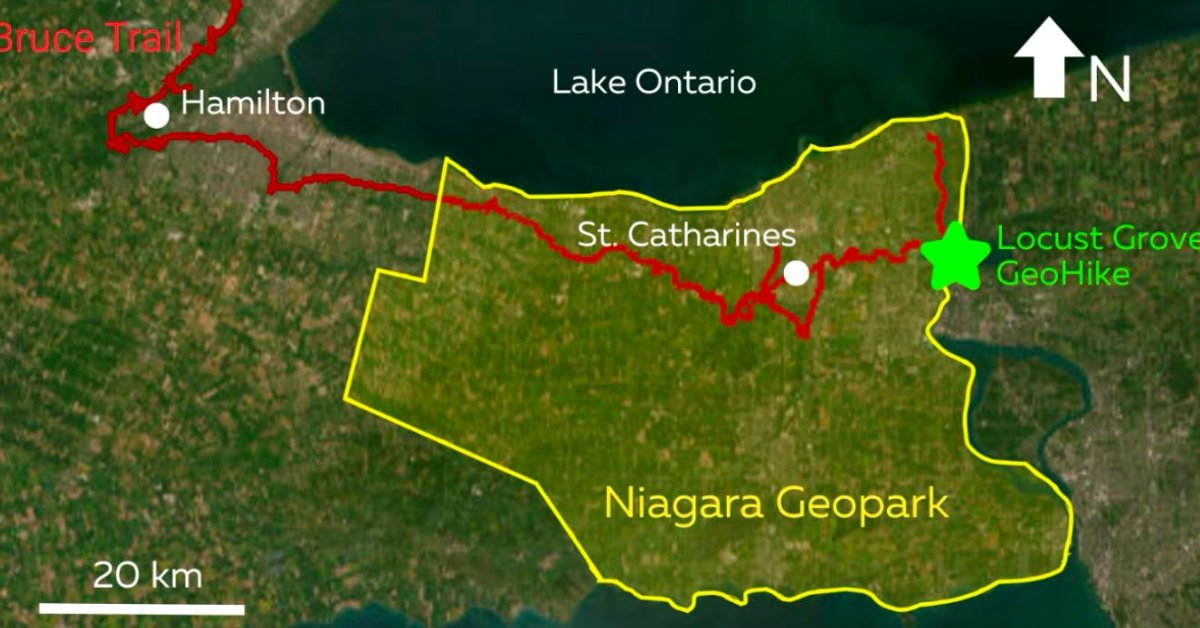
In this episode, I sit down with author Katie Maloney and illustrator Alex Young to talk about their brand-new children’s book Rocky the Raccoon Explores the Niagara Escarpment, which is directly aligned with the Grade 4 Ontario science curriculum. We dive into the art of science communication—how to take complex ideas and transform them into fun, accessible stories that spark curiosity. Katie and Alex share what it was like to bring Rocky to life, from the creative process of writing and illustrating to the challenges of making geology engaging for kids. We also discuss why it’s vital for scientists to share their work with the public, and how teachers can use Rocky the Raccoon as a classroom resource. Listen now: You can also listen to our podcast on these platforms: Audible Apple Podcasts Spotify Read along with the podcast transcript: Introduction Hello, everyone. Welcome to Beneath Your Feet, a geoscience podcast. I’m Veronica Klassen, science communicator, geology enthusiast and your host. Here at the APGO Education Foundation, our mission is to spark curiosity and passion for the geology of Ontario. Whether you’re a geology nerd, science enthusiast, or nature lover, this podcast is for you. Join us as we geek out over fascinating geology, uncover the hidden storiesand secrets of our extraordinary planet and explore the captivating world beneath your feet. Veronica Klassen Hello, everyone, and welcome to another episode of Beneath Your Feet. Today I’m going to be talking to Katie Maloney and Alex Young, who’ve been writing and illustrating a children’s book about the geology of the Niagara Escarpment. Rocky The Raccoon, which is out now, is a story about a raccoon exploring the Niagara Escarpment, learning about geology and the environment. The goal of the book is to educate, inspire kids to get outside and explore the natural environment. So thank you guys so much for joining me. Why don’t you start by telling me a bit about yourselves? Who are you and what do you do? Katie Maloney So I’m Katie Maloney. I am a paleontologist and I’m currently a Rebanks fellow at the Royal Ontario Museum, so studying some of the fossils in their collection. I did my Ph.D. and Master’s at University of Toronto and my undergrad at McMaster, and then I did a short post-doc at McMaster, kind of working on this project and another postdoc at McGill University, working up in the Arctic on some older fossils that are about a billion years old. And I’ll be starting at Michigan State this August. Alexander Young And my name is Alex Young. I’m a biomedical communicator and freelance medical illustrator, which doesn’t necessarily mean a ton, we’ll get into what those mean probably later on in the podcast. But broadly, I would consider myself a scientific communicator that focuses on visuals. And so Katie asked if I could help illustrate this book, bring Rocky to life. And given the fact that I can draw most of the time, and also I am able to relatively accurately convey that science because of my background, that’s why I got brought onto the project. And why I can do the things accurately? Well, I did my Master’s at UofT in medical illustration and science communication, and prior to that I did my undergrad at Mac in Integrated Science, which is actually where I met Katie and Carolyn, the other co-author on the book. So, yeah. Veronica Perfect. Thanks so much, guys. So I am so excited to hear about this book that you are working on. So how did this project come about? Where did the idea originally start? Katie So the idea for the book originally started when I was a Mitacs postdoctoral fellow at McMaster University, and so we had a project working on geoscience communication, trying to sort out how we could have people be more engaged with the Niagara Escarpment, since it affects everyone’s everyday lives throughout the Hamilton Niagara area. And so the project originally started with several undergraduate students who were supposed to work in a lab during COVID. And then when the COVID pandemic hit, they were not allowed in the lab space at McMaster University. So instead what they did is they rode their bikes along the Niagara Escarpment and picked out different areas of interest. So the project was in motion long before I joined. But when I joined in 2022, it was a lot of putting the data that these students had gathered over several years together and making it accessible for the public. And then Deana, who works for the APGO Education Foundation, puts all this fantastic information and data into these story maps that people can access online and use to have a virtual guide to these trails. Veronica Okay, awesome. And how did you get connected to this Alex? Alex So I got brought in as an illustrator once they got sort of some funding and the project evolved into, you know, how can we make this a more engaging experience to introduce the topics and the subject matter to the school system as well. And sort of with a focus on, you know, local schools that are adjacent to the Niagara Escarpment, but beyond that, as well what would be useful for Ontario students given the curriculum and what they’re taught about earth sciences at the elementary school level. And once they realized that they wanted to do an illustrated book that could connect to elementary school students, then Katie and Carolyn co-author got in touch. They knew that I had been in ISci with both of them, Carolyn was our prof, and then I had sort of moved into this capacity as a medical illustrator and they thought that it would be a good fit for the book. And then it became a very fun mash up of like personal, because obviously I have so much respect for Katie and Caroline and being able to work with them again is

Read More »