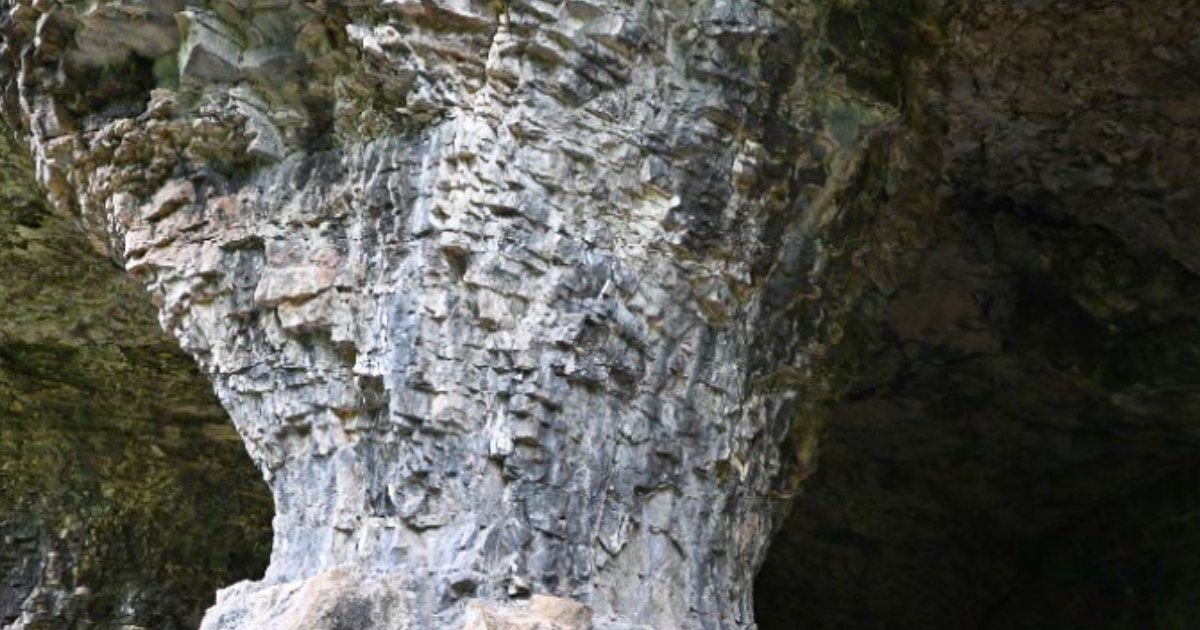
Dolostone rock formations at Bruce’s Caves Conservation Area along Georgian Bay, Ontario.

Geodiversity Education Foundation Releases the Bruce’s Caves GeoHike

The Geodiversity Education Foundation, in partnership with McMaster University’s School of Earth, Environment & Society, is pleased to introduce the Bruce’s Caves GeoHike, a new virtual hiking tour along the shores of Georgian Bay. Featuring six stops within Bruce’s Caves Conservation Area, the tour explores an ancient shoreline, fascinating cave formations, glacial erratics and the geological processes that have shaped the landscape over thousands of years. Whether exploring the trails in person or discovering them virtually from home or the classroom, visitors can learn about the remarkable geological history of this part of Ontario. The Bruce’s Caves GeoHike is the latest addition to our growing collection of interactive GeoHikes across Ontario. READ FULL PRESS RELEASE

Read More »
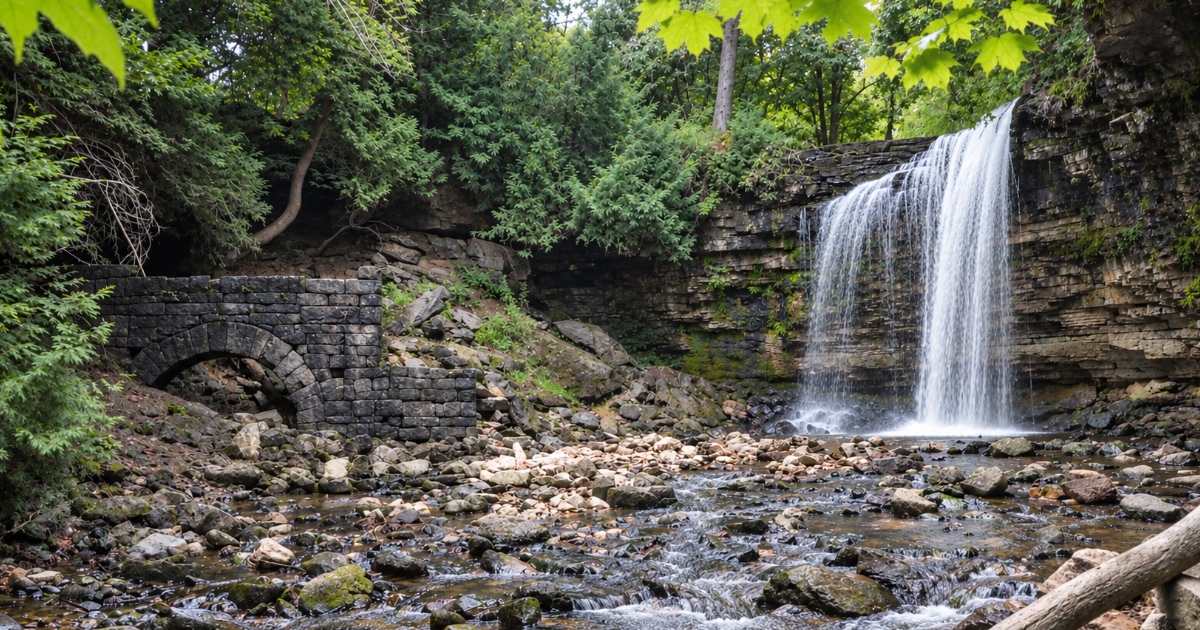
Hilton Falls waterfall cascading over layered rock formations beside historic stone sawmill ruins near Milton, Ontario.

Geodiversity Education Foundation Releases Hilton Falls GeoHike

October 29, 2026, Toronto, Ontario: The Geodiversity Education Foundation, in partnership with McMaster University’s School of Earth, Environment & Society, is pleased to announce the release of the Hilton Falls GeoHike, a new virtual walking tour located just west of Milton, Ontario. Following five stops along the Hilton Falls Trail, the GeoHike explores how water and glacial activity have shaped the local landscape. Highlights include a seasonal vernal pool, the picturesque Hilton Falls waterfall, an impressive glacial pothole, and the historic ruins of a 19th-century sawmill. Developed as part of the Foundation’s growing collection of Ontario GeoHikes, this interactive experience combines geological explanations with immersive digital features, allowing visitors to explore the area’s natural history either on the trail or virtually from home or the classroom. The Hilton Falls GeoHike offers an engaging opportunity to discover the geological wonders of Southern Ontario, less than an hour from Toronto. READ FULL PRESS RELEASE

Read More »
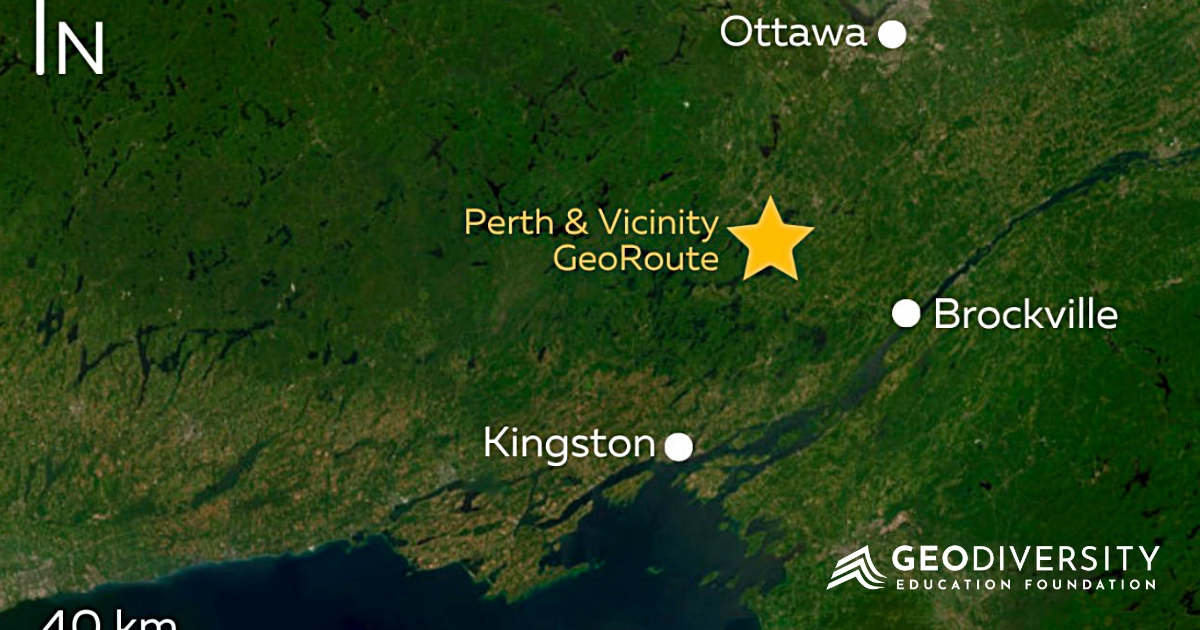
Satellite map showing the Perth & Vicinity GeoRoute in Ontario, southwest of Ottawa, with Kingston and Brockville marked for reference.

Geodiversity Education Foundation Releases Perth & Vicinity GeoRoute

October 26, 2026, Toronto, Ontario: Geodiversity Education Foundation in partnership with theUniversity of Ottawa is pleased to announce the release of the Perth & Vicinity GeoRoute, southwest ofOttawa (see Figure 1). This driving tour takes you to 11 stops in and around Perth and highlights localgeology and the geological processes that led to the formations you encounter on the tour. All of ourGeoRoutes can be viewed on our GeoRoutes page. The area in and around Perth Ontario showcases a diverse collection of outcrops that were deposited overa large geological time span. The oldest rocks you will encounter on this tour are faulted, folded, and highlymetamorphosed Precambrian igneous rocks and sedimentary rocks that form part of the Canadian Shieldcalled the Grenville Structural Province. READ FULL PRESS RELEASE

Read More »
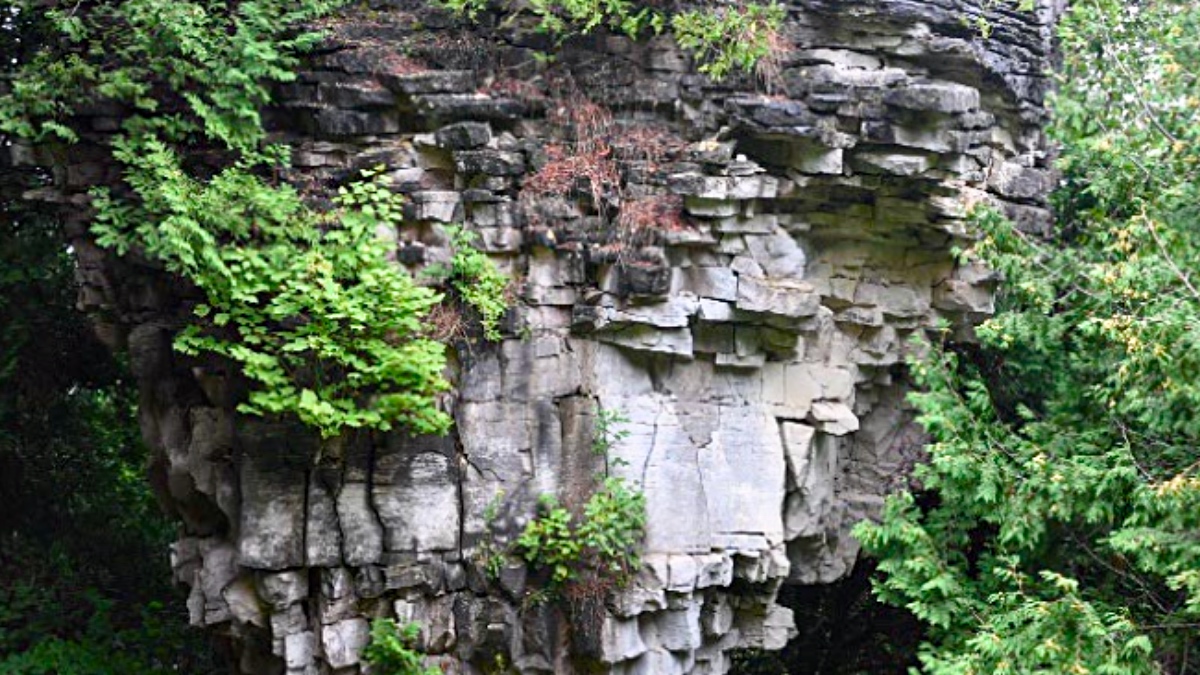
The Akandoowinini sea stack (also called “Devil’s Monument”) at Stop #4 on the Akandoowinini GeoHike.

Geodiversity Education Foundation Releases Akandoowinini GeoHike

October 22, 2026, Toronto, Ontario: The Geodiversity Education Foundation and the School of Earth, Environment & Society at McMaster University are pleased to announce the release of the Akandoowinini GeoHike, located in Bruce Peninsula, along Georgian Bay. This virtual walking tour follows 5 stops in Akandoowinini and highlights local geology and the geological processes that led to the formations you encounter on the tour. READ FULL PRESS RELEASE

Read More »
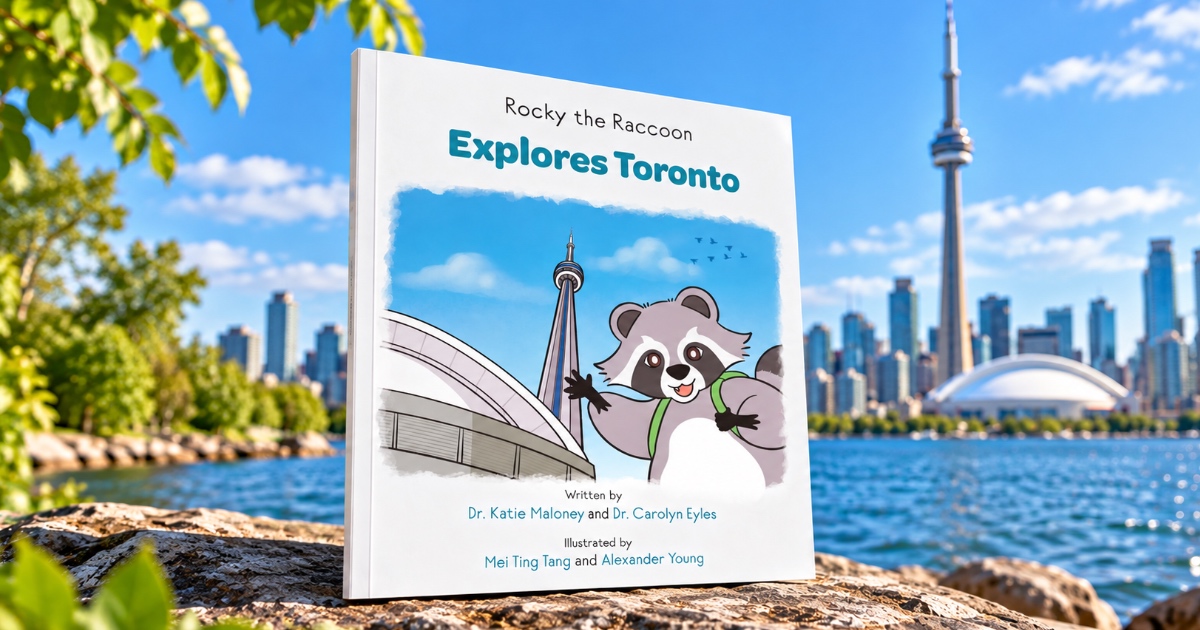
Rocky the Raccoon with Lily the fossil crinoid outside the Ontario Legislative Building at Queen's Park in Toronto, featured in the children's geology and Earth science book Rocky the Raccoon Explores Toronto.

New Children’s Book Out Now: Rocky the Raccoon Explores Toronto!

The Geodiversity Education Foundation is excited to announce the release of its second children’s book, Rocky the Raccoon Explores Toronto, developed with support from the Canadian Geological Foundation! Join Rocky and his fossil friend Lily the Crinoid as they embark on an exciting adventure through Toronto, uncovering the city’s fascinating geological history, ancient fossils, critical minerals and hidden natural wonders. From the Royal Ontario Museum and Queen’s Park to the Don Valley Brick Works, young readers will discover the geology and environment beneath one of Canada’s largest cities. Written by geoscientists Dr. Katie Maloney and Dr. Carolyn Eyles, this beautifully illustrated book brings Earth science to life for children and families. The book is now available in print and FREE to read online in our Kids Zone!

Read More »
Rocky the Raccoon Explores Toronto children's book featuring Rocky, the CN Tower and Rogers Centre, published by the Geodiversity Education Foundation.

Geodiversity Education Foundation Releases “Rocky the Raccoon Explores Toronto”

October 8, 2026, Toronto, Ontario: Geodiversity Education Foundation (GEF) and the Canadian Geological Foundation are pleased to announce the release of the Foundation’s second children’s book. This book follows Rocky the Raccoon as he explores the City of Toronto with his fossil friend Lily. Published by the Geodiversity Education Foundation, Rocky the Raccoon Explores Toronto is an engaging educational children’s book written by geoscientists Dr. Katie Maloney, P.Geo. and Dr. Carolyn Eyles, P.Geo. with illustrations by Mei Ting Tang and Alexander Young. The story follows Rocky, a curious raccoon from the Niagara Escarpment in Hamilton, who visits his cousins in Toronto.

Read More »
APGO Education Foundation and GeoscienceINFO announce their new identity as Geodiversity Education Foundation, building on a decade of impact in geoscience education.

APGO Education Foundation Is Now the Geodiversity Education Foundation

We’re excited to announce a new chapter! The APGO Education Foundation has officially become the Geodiversity Education Foundation, bringing GeoscienceINFO.com and the Foundation together under one unified website, geodiversity.ca. With a fresh identity and an exciting vision for the future, we’re bringing geoscience education to life through innovative technology, immersive field trips, accessible learning resources and engaging public outreach. Click here to explore our PDF presentation and discover our new identity, mission and vision, and see what’s ahead for the Geodiversity Education Foundation!

Read More »

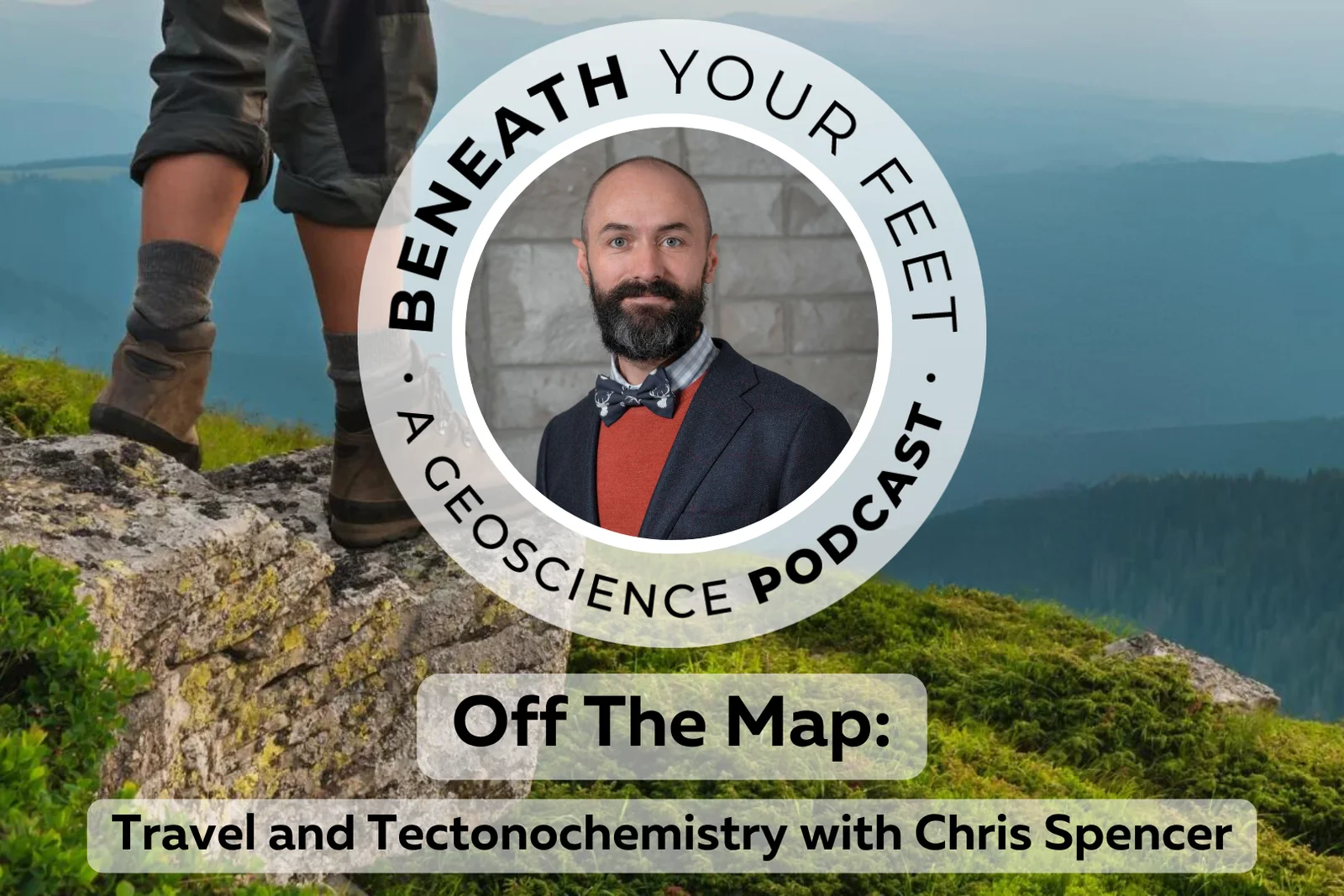
Off The Map: Travel and Tectonochemistry with Chris Spencer

From getting stranded in the middle of the desert and walking two days to the nearest town, to burning the soles of his shoes on two-week old lava, Chris Spencer is truly a well-travelled geologist and adventurer! As a professor at Queens University (the best job in the world according to Chris), he teaches field geology, helps run the geochemical facility, and does research all over the world on tectonochemistry. Listen in to hear his advice for students, fun travel stories, and passion for the earth that shows in every story he tells. Listen now: You can also listen to our podcast on these platforms: Amazon Music Apple Podcasts Spotify Read along with the podcast transcript: Introduction Hello, everyone. Welcome to Beneath Your Feet, a geoscience podcast. I’m Veronica Klassen, science communicator, geology enthusiast and your host. Here at the APGO Education Foundation, our mission is to spark curiosity and passion for the geology of Ontario. Whether you’re a geology nerd, science enthusiast, or nature lover, this podcast is for you. Join us as we geek out over fascinating geology, uncover the hidden storiesand secrets of our extraordinary planet and explore the captivating world beneath your feet. Veronica Klassen Hello, everyone, and welcome to another episode of Beneath Your Feet. Today, our guest is Chris Spencer, who is a researcher at the University of Queen’s in Kingston, Ontario. He studies tectonochemistry, which is something that I am not familiar with so I’m very excited to learn more; with a lot of research rooted in fieldwork, including lots of travel, which I’m also very excited to hear about. So thank you so much for being with me here today. Chris Spencer Happy to be here.  Veronica All right. So to get started, just tell us a bit about yourself. Who are you and what do you do? Chris My name is Chris Spencer. I am a professor of geology at Queen’s University. I’m originally from the US, but left the US about 15 years ago and did my Ph.D. and post-doc in the United Kingdom. And then I had a research position at Curtin University in Western Australia and since 2020 I have been a professor at Queen’s. Veronica And what is a day in the life look like for you? Christ Yeah. So I mean, as a professor, I think the most natural thing that I’m doing is teaching students. And so my role in the teaching program at Queen’s is primarily focused in teaching field geology. And so I teach a few different field geology courses to our students at Queen’s, just teaching them how to do things in the field, how to be a field geologist, how to read and interpret maps, how to construct maps, and how to extract information from rocks that become spatially relevant, and then how to collect samples that we can take back to the laboratory to do other tests to, I guess, evaluate the properties of those rocks. So teaching is I guess kind of my my first duty as a professor. But then I also run the geochemical facility at Queen’s with a colleague of mine. And the geochemical facility is where we have lots of different instrumentation that is used specifically to evaluate the composition of various rocks. But in addition to analyzing rocks, we also analyze a lot of biological specimens that have geologic interest. And then we’re able to then use the compositional features of various samples to understand kind of how they formed and how they have evolved through time. And so I do spend a lot of time in the laboratory working with technicians and students for the isotope facility at Queen’s.  And then the third part of my job is doing fieldwork for my own research and for the research of my graduate students. I’ve got about a dozen students that are working with me, ranging from undergraduate students all the way through to master’s and PhD students. And their research is happening all over the world. I’ve got a student who’s on a plane right now to China to do some work in China, and then I’ve got students who are working in West Africa, students who are working in Europe and South America. And so I tend to travel around a lot specifically to look at the rocks in different localities and to collect samples and then bring those samples back to my laboratory to see if I can understand better kind of when they form to how they formed and how they fit into a larger system of kind of planetary evolution, how the planet has changed over time. Veronica That’s so interesting. And can you explain a little bit like what actually is tectonochemistry? Chris Yeah, So tectonochemistry is a silly word that I that I made up to describe the research that I do because I am very interested, as I said, in the evolution of our planet and specifically the tectonic evolution. So plate tectonics is kind of what is a dominant feature that’s happening on the surface of the earth, where we have tectonic plates that are kind of floating around on the mantle. And the interactions at plate boundaries are what leads to things like volcanoes and metamorphism and earthquakes. And today we have kind of a very clear understanding of those tectonic processes. However, it is unclear how those tectonic processes have evolved over time. We think that the Earth’s mantle today is much cooler than it was billions of years ago. And so you can imagine in the same way as if you’re cooking a pot of oatmeal, if you turn the stove very high, that oatmeal is going to cook differently than if you have the stove on very low. And so my research is trying to understand how plate tectonics have evolved over time as the Earth is slowly cooling. And this also has implications for other planetary bodies like Venus and


Read More »

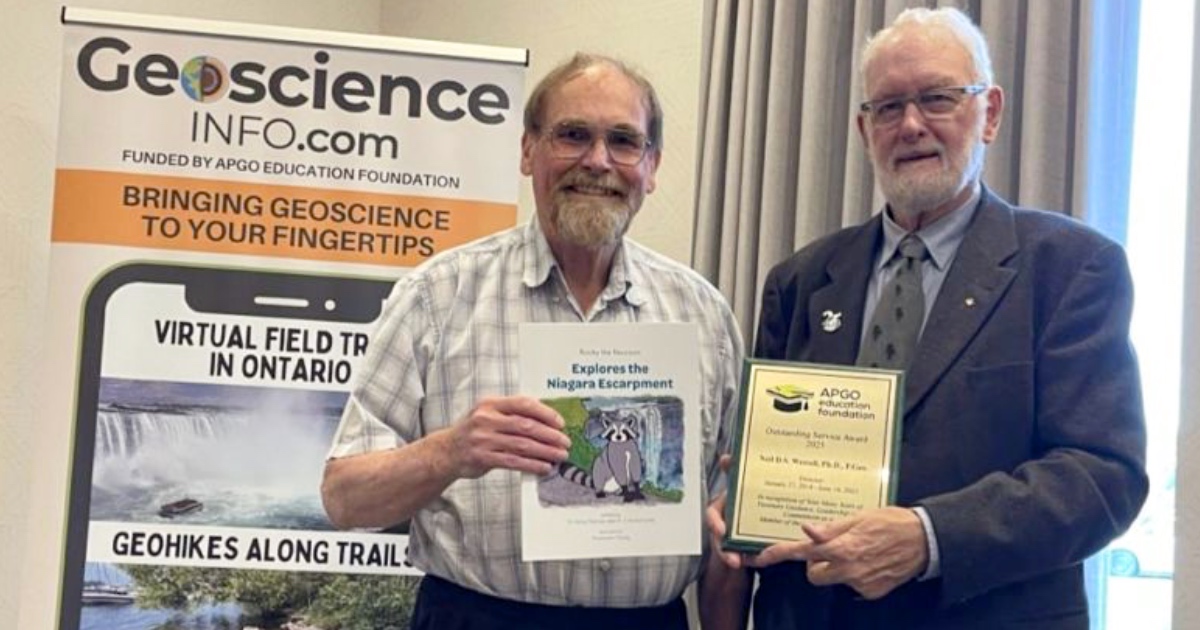
APGO Education Foundation Announces the Passing of Founding Director Dr. Neil D.S. Westoll, P.Geo.

August 19, 2026, Toronto, Ontario: The APGO Education Foundation (“APGOEF”), mourns the loss of founding director Dr. Neil D.S. Westoll, P.Geo. who passed away peacefully at the age of 85 on August 12, 2026, after a brief battle with cancer. He is survived by his wife of 55 years, Maureen, his daughter, Kathryn, his son, Andrew, his grandchildren, Ivy and Remy, and his daughters-in-law, Andrea and Samantha. Dr. Westoll was widely experienced in mineral exploration and business development internationally, having spent over 50 years with senior and junior Canadian and international mining companies in exploration and business development and as an independent consultant to the mining industry. Since 2001, he has focused on the environmental and consultation aspects of the mining business. This has included work in notable areas such as the Ring of Fire in northern Ontario. In January 2014, he joined as a founding director of APGOEF. The Foundation is focused on educating the public about geoscience, supporting undergraduate students studying geoscience and supporting internationally trained geoscientists to obtain their professional registration in Ontario. In 2025, APGOEF celebrated its 10th anniversary. Its innovative flagship website, GeoscienceINFO.com launched in June 2017, now has 58 virtual field trips with a remarkable 571 stops plus a wide range of information to educate the public about geoscience. During those 10 years, APGOEF has awarded 19 scholarships totaling $95,000 to 3rd year geoscience students that are proceeding to 4th year with a curriculum program enabling them to complete the knowledge requirements for professional registration. In addition, APGOEF has awarded $31,500 in bursaries to support internationally trained geoscientists who are immigrants to Canada to obtain their professional registration with PGO. Dr. Westoll retired from the board of directors in June 2025 after 10 years of service. Continue reading press release >>

Read More »