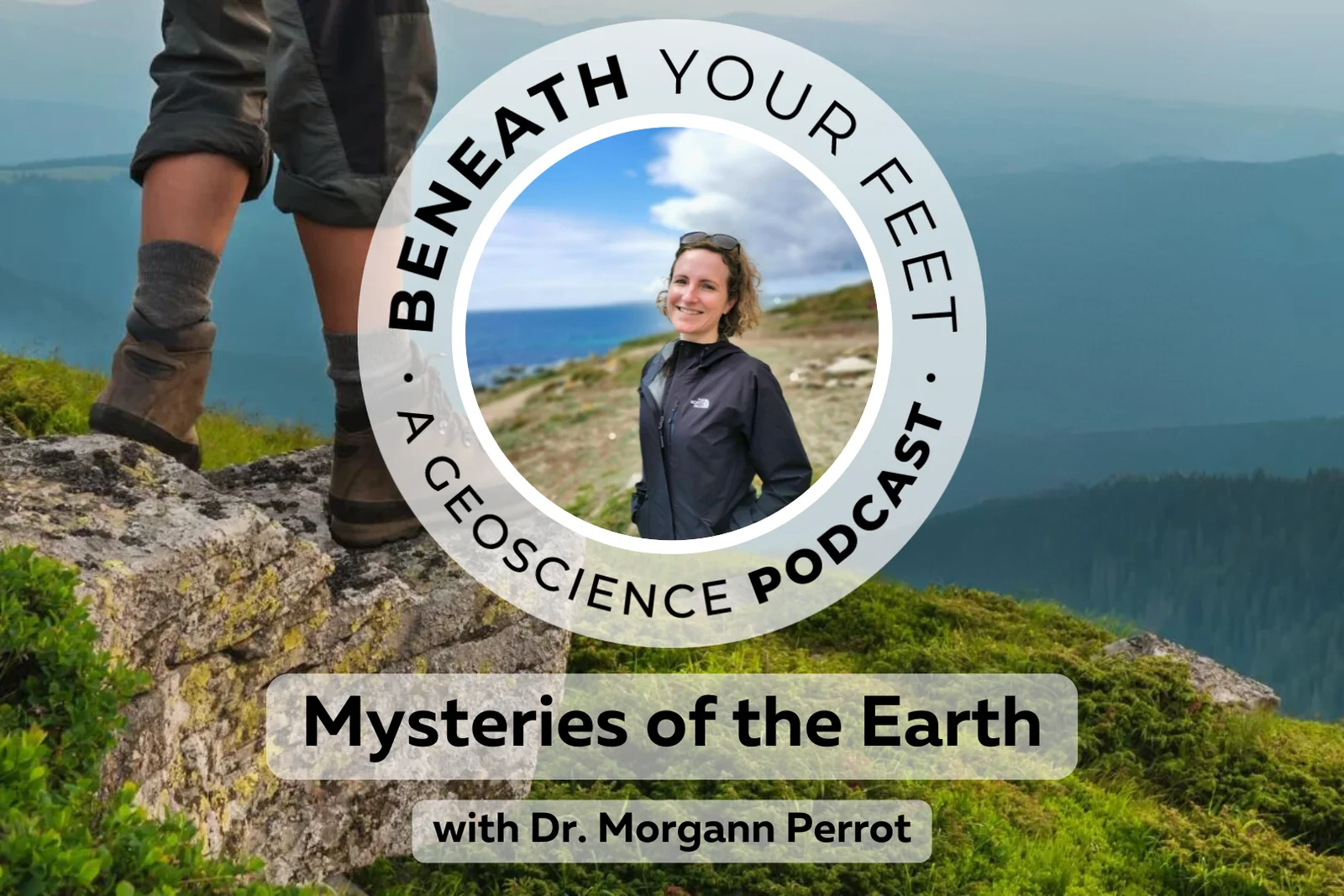
Mysteries of the Earth with Dr. Morgann Perrot

Perrot was never a hiker – she preferred to stay indoors thank you very much. It was much to her parents surprise (and hers!), when she discovered she loves geology. Her love of thriller books and murder mysteries first led her to study medical science, but she wasn’t satisfied. When she found geoscience and learned you can use science to solve mysteries of the earth, she knew that’s where she belonged. Now, Dr. Perrot explores the Appalachian mountains in the summertime, doing as much field work research as possible, and lecturing at McGill University during the rest of the year. Every day is different, and she loves the variety. Tune in to learn more about Perrot’s research and journey! Listen now: You can also listen to our podcast on these platforms: Amazon Music Apple Podcasts Spotify Read along with the podcast transcript: Introduction Hello, everyone. Welcome to Beneath Your Feet, a geoscience podcast. I’m Veronica Klassen, science communicator, geology enthusiast and your host. Here at the APGO Education Foundation, our mission is to spark curiosity and passion for the geology of Ontario. Whether you’re a geology nerd, science enthusiast, or nature lover, this podcast is for you. Join us as we geek out over fascinating geology, uncover the hidden storiesand secrets of our extraordinary planet and explore the captivating world beneath your feet. Veronica KlassenHello, everyone, and welcome to another episode of Beneath Your Feet. Today I am here with Dr. Morgann Perrot, who is a faculty lecturer at McGill University. She studies how the Earth’s crust deforms, breaks and builds mountains with a special interest in the northern Appalachians. She combines fieldwork with isotope geochemistry to piece together the tectonic history hidden in rocks. As a dedicated educator, she brings her research and field experience directly into the classroom, teaching, field mapping and structural geology related courses. I’m so excited that you’re here today with me, Dr. Morgan. Dr. Morgann PerrotHi, Veronica. It’s nice to be here with you. VeronicaSo first question, just tell us a bit about yourself. Who are you and what do you do? MorgannWell, I think you did a good synthesis of what I’m doing and that. So, yeah, I’m a lecturer at McGill University. I’m teaching structural geology, geology in the field. So also a field course about geology. So it’s a lot of geology courses that are linked to going outside, understanding rocks, how they deform when they are under pressure and stress and trying to understand this. And so this is linked to the how mountains are forming and deforming, actually. I’m teaching these courses and on the side I’m also doing some research about deformation too. So looking at how rocks will fold, crack. When do they do that? Looking at around us if we see some deformation and when did that happen? Because the earth is quite old, more than 4.5 billion years old. So some rocks have been deformed for billions of years. Some rocks are deforming just right now under our feet. So yeah, the question is when did that happen and why? So that’s the question I’m trying to answer. VeronicaOkay, that sounds super interesting. So what does a day in the life look like for you? MorgannI guess it really depends on the season, and that’s what I like about my job. Over a year things really change. So for example, during summer I’m going to do more fieldwork, I’m going to go outside. Especially being a researcher in Canada doing fieldwork, looking at rocks during winter, it’s not really possible. Well, especially because my research is also in Canada mostly, so when there is a lot of snow, it’s not really easy. So yeah, we’re doing field work mostly in the summer, so I concentrate my summers doing research, going outside in the fields, but also bringing back rocks in the lab and doing lab work. During fall and winter, I’m more teaching so I’m more in McGill with students, so I’m doing a lot of courses relating to going outside too. So we’re trying to deal with the weather. So when it’s nice weather, we’re going outside in the field. When it’s more snowy or cold, we stay inside and do more theoretical lectures, you know? So every day I’m going to do a bit of, you know, reviewing articles for colleagues, for other students, helping students to look at their thesis, master thesis, PhD thesis. Doing some tasks in the department and some colleagues need some help and support and yeah things like that. What’s fun is that there was not one day where I do the same thing, so I can’t really describe a really ideal day, you know, it changes everyday. VeronicaRight? Yeah, Yeah. There’s a lot of variety that’s awesome. And so are you doing your own research as well or you just like supervising research? How does that all work? MorgannYeah, so my main job as a lecturer is to teach. So I teach most of the semester, every semester, but on the side I’m also involved in some research projects. So it depends. There is some projects that I lead myself for myself mainly for my own interest, but there is also some project in which I’m involved with students for their masters thesis, for their PhD thesis. I’m not the principle supervisor of students at the moment. I just started at McGill. But I’m involved as collaborator in projects like this. I also, so what I’m trying since I started in McGill is to, every summer have an undergrad student working with me to do some initiation, to research, to be in the field, to do a bit of lab work. And I find this very important for students to discover really early on what is research and do they want to continue into masters or not, or into PhDs or not? VeronicaYeah, that’s really awesome and I think really useful for students hopefully to figure
Read More »

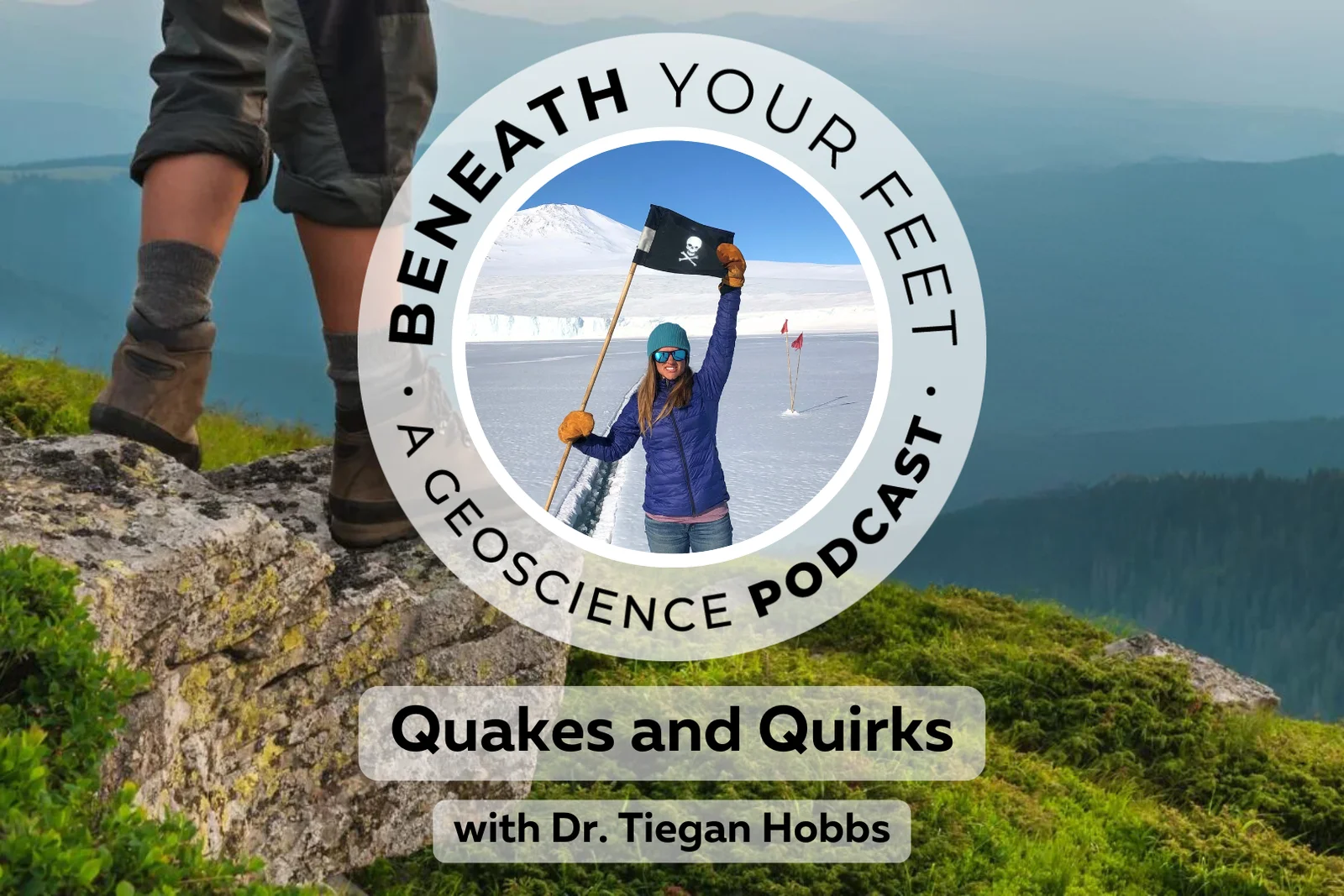
Quakes and Quirks with Dr. Tiegan Hobbs

Get in-depth with Dr. Tiegan Hobbs on all things earthquakes! Listen in as we talk about the many (many!) cool projects Hobbs has on the go that take her from answering emails at her desk, to digging an eight metre trench in the wilderness, to (very very gently) throwing seismometers off a ship to measure the ocean floor. Hobbs discusses imposter syndrome and how she takes the attitude that, even if you don’t feel like you’re ready, there’s someone else out there who is less prepared than you, and they’re going to do it anyways. So be the imposter, and do it with whimsy! Listen now: You can also listen to our podcast on these platforms: Amazon Music Apple Podcasts Spotify Read along with the podcast transcript: Introduction Hello, everyone. Welcome to Beneath Your Feet, a geoscience podcast. I’m Veronica Klassen, science communicator, geology enthusiast and your host. Here at the APGO Education Foundation, our mission is to spark curiosity and passion for the geology of Ontario. Whether you’re a geology nerd, science enthusiast, or nature lover, this podcast is for you. Join us as we geek out over fascinating geology, uncover the hidden storiesand secrets of our extraordinary planet and explore the captivating world beneath your feet. Veronica KlassenHello, everyone, and welcome to another episode of Beneath Your Feet. Today, I’m here with Dr. Tiegan Hobbs, who is a research scientist for the GSC, the Geological Survey of Canada, as well as an adjunct professor at the University of British Columbia and the University of Victoria. She is also a lead scientist for the National Seismic Risk Model, which estimates the impacts of earthquakes on buildings and people across Canada. Today we’re going to be talking about earthquakes, we’re going to be talking about faulting, plate tectonics, exciting things that we haven’t really covered in the podcast before, so I’m really excited to get into it. Thanks so much for being with me. Dr. Tiegan HobbsOh, thank you for having me. I’m really stoked. VeronicaAwesome. All right. So to start, if you want to just tell me, who are you and what do you do? TieganWho am I? What a question, its a big one. I was born in… No, I’m a research scientist, as I think you already mentioned. So my main job is I’m the lead scientist for the national seismic risk model, which is a nationwide assessment of basically what are the likely impacts from earthquakes that could occur in or near Canada. So that’s sort of my main role. And then I also work a little bit on some active faulting projects looking for evidence of active fault lines. Yeah. So overall, I would say that I’m a geophysicist and I work a little bit in some areas like geology, geomorphology and geotechnical engineering. VeronicaOkay. So what would you say your kind of niche is within that? TieganI think the area that I have developed expertise that’s like a little bit more on the rare side is probably in the world of seismic risk. In the insurance industry, they have a lot of folks who are measuring seismic risk. But in the academic side of things or like, you know, government science, it’s not necessarily an area that you have a ton of people working. And so that’s kind of the area that I would sort of consider my area of expertise that I most often get tapped for is like, oh, can you be a subject matter expert on this? Which is quite cool. I really enjoy that area and I feel like it does a really nice job of getting to blend the different areas that I’ve studied. You’re kind of combining, having to have a really good understanding of seismology and where earthquakes can occur and how big they’re going to be and how much the ground is going to shake. And then also have this understanding of like what is the built environment and how do we combine that scientific understanding with our engineering knowledge. And then even a step further to say, okay now you kind of have to have a bit of a communication perspective on–because this is very applied science, we want to make sure that we’re answering the questions that the decision makers have. And so being able to take all of that and then convey it to the people who need to understand it and get some feedback from them about like, yeah, what are the questions you have to answer in your day to day at work? And how can I make sure that the science that we’re doing is going to give you the right base of evidence to make the best decision that you can in your role. So it’s yeah, I find it’s like a really neat intersection of science, engineering and society as well. VeronicaHmm. That’s so cool. So are you working in your day to day with those policymakers and engineers? TieganKind of, yeah. Like, yeah, when I look at, what’s the roster of meetings for the week? It’s like yesterday I was talking to the National Building code some past groups in there. And then last week I had a meeting with some decision making folks out West here who are responsible for some health care assets. And they were thinking like, how are we going to make decisions right after an earthquake happens and how can we prepare ourselves to make the best possible decisions with the resources that we’ll have on hand. So being able to sort of help out with that a little bit and say like, yeah, well, here’s where the science is and here’s how it can best inform your decision making. And do the best I can to help them set them up to all to make good decisions. Yeah. And then I’ll have meetings with my engineering colleagues or, you know, working with students and yeah, it’s kind of I feel

Read More »
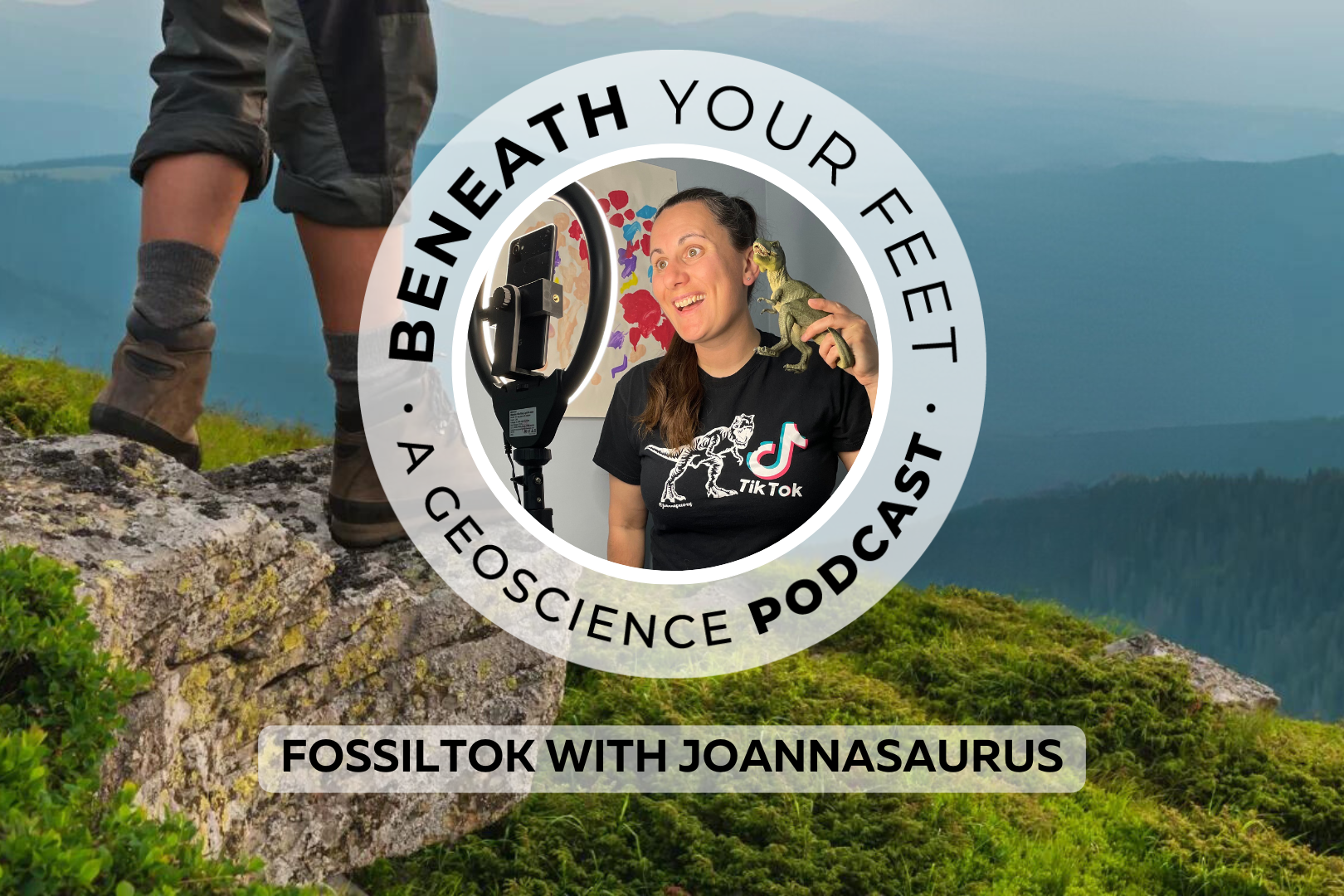
Headshot of Joanna Northover over image of a hikers boots and mountain landscape. Text reads: Beneath Your Feet. A Geoscience Podcast. FossilTok with Joannasaurus.

FossilTok with Joannasaurus

In our latest episode, we speak with @Joannasaurus — a paleontologist and science communicator who’s using TikTok to make fossils fascinating for everyone. Joanna talks about what it takes to make complex science accessible, the role of humour in online storytelling, and her roundabout journey to paleontology! Listen now: You can also listen to our podcast on these platforms: Amazon Music Apple Podcasts Spotify Read along with the podcast transcript: Introduction Hello, everyone. Welcome to Beneath Your Feet, a geoscience podcast. I’m Veronica Klassen, science communicator, geology enthusiast and your host. Here at the APGO Education Foundation, our mission is to spark curiosity and passion for the geology of Ontario. Whether you’re a geology nerd, science enthusiast, or nature lover, this podcast is for you. Join us as we geek out over fascinating geology, uncover the hidden storiesand secrets of our extraordinary planet and explore the captivating world beneath your feet. Veronica KlassenWell, welcome, everyone, to another episode of Beneath Your Feet. Today, I’m going to be talking to Joanna Northover, who is a science communicator on TikTok. We’re going to be talking about science communication, we’re going to talk about her career in geoscience, we’re going to talk about advice for students and all kinds of exciting things. So thanks so much for joining me, Joanna. JoannaNo problem. It’s my pleasure. It’s going to be a lot of fun. VeronicaAmazing. I’m very excited. All right. So why don’t we just start. Tell me a bit about yourself. Who are you and what do you do? JoannaAll right. Well, as you said, my name is Joanna Northover, but on TikTok, Instagram and YouTube, I go by Joannasaurus and I am a science communicator. But I started out interested in paleontology. So my science communication really centers around paleontology. So fossils, dinosaurs, things like that. And I have loved paleontology for as long as I can remember. And so it was sort of, I had a few stumbles along the way. We’ll probably talk about that later on. But I did do a master’s degree and an undergraduate degree in paleontology. But then I fell in love with science communication, and the rest, as they say, is history. VeronicaThat’s awesome. So yeah, so going a bit back, how did you originally become interested in paleontology and how has that journey sort of changed for you over time? JoannaAll right. So I guess a lot of people go through a dinosaur phase when they’re kids, and I was no exception. My was quite early. I really loved dinosaurs, even at a very young age and as young as the age of four, I declared that I was going to become a paleontologist. And that was a dream that I held for a very, very long time until I hit my teens. And, you know, I kind of got a little discouraged. I thought maybe this wasn’t a practical career, you know, And I thought, oh, well, maybe I’ll be a teacher instead, because I also really loved teaching. Even from a young age. I used to pretend to teach my little brother, you know, with a pointing stick and some little diagrams and stuff. And so when I was in high school, you know, I kind of pivoted a bit and I thought, Oh, I’ll do a degree, and then I’ll go to Teachers College. And I had really good marks in history and chemistry. So that’s what I applied to. I did actually apply to paleontology as well, and I got in at UofT, but I was too nervous to move all the way there because at the time I was one of the first years to do that double cohort thing where, you know, in Ontario we went from having grade 13 to going to grade 12. And so I was 17 when I graduated. I wasn’t even a legal adult, and I just felt like really nervous about going too far away from home all by myself. VeronicaCause where is home for you, sorry? JoannaOttawa. I grew up in Ottawa and that’s where I live now, so I didn’t want to go too far away from home. So I decided I would go to university at Ottawa U. And I decided to go into history and I did my first year of history and I dropped both of my history courses. So I was like, Wow, wow, this isn’t the right major. And I was like, well, maybe I made a mistake here, so that’s not a good sign. So I had done actually a first year geology course as one of my breadth courses when I was at Ottawa U. I’d also taken a lot of philosophy and I almost switched to a major in philosophy. My mom actually, of all people, said, Did you know that Carleton has just started a vertebrate paleontology concentration from the Earth Science Department? And so I applied right away. I switched over. I thought, you know what? I knew more when I was four than I know now. I just I’ll go to school and I’ll figure it out after. I’ll just, I have to study something I love or else this is going to be a disaster. And so I transferred over to Carleton and I started in the Earth Science department there doing my vertebrate paleontology concentration. And it was just magical. Suddenly it was easy to go to school. I wasn’t dropping my courses. I had so much fun. The department there was great, really supportive, and I liked it so much that after I did my bachelor’s degree, I ended up deciding to stay and do a graduate degree. I did a master’s degree also at Carleton. But while I was doing my bachelor’s and master’s, I started working in the summers at the Royal Tyrrell Museum of Paleontology, where I was working in the Science Education Department. And also I did some science education sort

Read More »
A hiker stands on the top of an outcrop looking over a distant mountain scene. Text reads: "Beneath Your Feet. A geoscience podcast."

Rocky the Raccoon Children’s Book: Interview with Katie Maloney and Alexander Young

In this episode, I sit down with author Katie Maloney and illustrator Alex Young to talk about their brand-new children’s book Rocky the Raccoon Explores the Niagara Escarpment, which is directly aligned with the Grade 4 Ontario science curriculum. We dive into the art of science communication—how to take complex ideas and transform them into fun, accessible stories that spark curiosity. Katie and Alex share what it was like to bring Rocky to life, from the creative process of writing and illustrating to the challenges of making geology engaging for kids. We also discuss why it’s vital for scientists to share their work with the public, and how teachers can use Rocky the Raccoon as a classroom resource. Listen now: You can also listen to our podcast on these platforms: Audible Apple Podcasts Spotify Read along with the podcast transcript: Introduction Hello, everyone. Welcome to Beneath Your Feet, a geoscience podcast. I’m Veronica Klassen, science communicator, geology enthusiast and your host. Here at the APGO Education Foundation, our mission is to spark curiosity and passion for the geology of Ontario. Whether you’re a geology nerd, science enthusiast, or nature lover, this podcast is for you. Join us as we geek out over fascinating geology, uncover the hidden storiesand secrets of our extraordinary planet and explore the captivating world beneath your feet. Veronica Klassen Hello, everyone, and welcome to another episode of Beneath Your Feet. Today I’m going to be talking to Katie Maloney and Alex Young, who’ve been writing and illustrating a children’s book about the geology of the Niagara Escarpment. Rocky The Raccoon, which is out now, is a story about a raccoon exploring the Niagara Escarpment, learning about geology and the environment. The goal of the book is to educate, inspire kids to get outside and explore the natural environment. So thank you guys so much for joining me. Why don’t you start by telling me a bit about yourselves? Who are you and what do you do? Katie Maloney So I’m Katie Maloney. I am a paleontologist and I’m currently a Rebanks fellow at the Royal Ontario Museum, so studying some of the fossils in their collection. I did my Ph.D. and Master’s at University of Toronto and my undergrad at McMaster, and then I did a short post-doc at McMaster, kind of working on this project and another postdoc at McGill University, working up in the Arctic on some older fossils that are about a billion years old. And I’ll be starting at Michigan State this August. Alexander Young And my name is Alex Young. I’m a biomedical communicator and freelance medical illustrator, which doesn’t necessarily mean a ton, we’ll get into what those mean probably later on in the podcast. But broadly, I would consider myself a scientific communicator that focuses on visuals. And so Katie asked if I could help illustrate this book, bring Rocky to life. And given the fact that I can draw most of the time, and also I am able to relatively accurately convey that science because of my background, that’s why I got brought onto the project. And why I can do the things accurately? Well, I did my Master’s at UofT in medical illustration and science communication, and prior to that I did my undergrad at Mac in Integrated Science, which is actually where I met Katie and Carolyn, the other co-author on the book. So, yeah. Veronica Perfect. Thanks so much, guys. So I am so excited to hear about this book that you are working on. So how did this project come about? Where did the idea originally start? Katie So the idea for the book originally started when I was a Mitacs postdoctoral fellow at McMaster University, and so we had a project working on geoscience communication, trying to sort out how we could have people be more engaged with the Niagara Escarpment, since it affects everyone’s everyday lives throughout the Hamilton Niagara area. And so the project originally started with several undergraduate students who were supposed to work in a lab during COVID. And then when the COVID pandemic hit, they were not allowed in the lab space at McMaster University. So instead what they did is they rode their bikes along the Niagara Escarpment and picked out different areas of interest. So the project was in motion long before I joined. But when I joined in 2022, it was a lot of putting the data that these students had gathered over several years together and making it accessible for the public. And then Deana, who works for the APGO Education Foundation, puts all this fantastic information and data into these story maps that people can access online and use to have a virtual guide to these trails. Veronica Okay, awesome. And how did you get connected to this Alex? Alex So I got brought in as an illustrator once they got sort of some funding and the project evolved into, you know, how can we make this a more engaging experience to introduce the topics and the subject matter to the school system as well. And sort of with a focus on, you know, local schools that are adjacent to the Niagara Escarpment, but beyond that, as well what would be useful for Ontario students given the curriculum and what they’re taught about earth sciences at the elementary school level. And once they realized that they wanted to do an illustrated book that could connect to elementary school students, then Katie and Carolyn co-author got in touch. They knew that I had been in ISci with both of them, Carolyn was our prof, and then I had sort of moved into this capacity as a medical illustrator and they thought that it would be a good fit for the book. And then it became a very fun mash up of like personal, because obviously I have so much respect for Katie and Caroline and being able to work with them again is

Read More »
A hiker stands on the top of an outcrop looking over a distant mountain scene. Text reads: "Beneath Your Feet. A geoscience podcast."

Fundy’s Fossil Coast: Special Episode with Dr. Jade Atkins and Danielle Serratos on the Bay of Fundy

Join host Veronica Klassen in Nova Scotia for this special episode on location at the Bay of Fundy! Dr. Jade Atkins, Curator and Director of Science Research at Joggins Fossil Cliffs, and geologist Danielle Serratos, Curator and Director of the Fundy Geological Museum, reveal the region’s one-of-a-kind fossils and dramatic geologic history. Along the way, they share the twists and turns of their unconventional paths into paleontology—and offer candid, inspiring advice for students and anyone charting their own career journey. Listen now: Spotify Amazon Music Apple Podcasts Read along with the podcast transcript: Introduction Hello, everyone. Welcome to Beneath Your Feet, a geoscience podcast. I’m Veronica Klassen, science communicator, geology enthusiast and your host. Here at the APGO Education Foundation, our mission is to spark curiosity and passion for the geology of Ontario. Whether you’re a geology nerd, science enthusiast, or nature lover, this podcast is for you. Join us as we geek out over fascinating geology, uncover the hidden storiesand secrets of our extraordinary planet and explore the captivating world beneath your feet. Veronica Klassen Hello, everyone, and welcome to another episode of Beneath Your Feet. Today is a super exciting day and one that I have been looking forward to for a long time because I’m actually here in Nova Scotia visiting the Bay of Fundy, which has the world’s highest tides, as well as the oldest dinosaur fossils in Canada. Danielle And even more importantly since we’re here at Joggins… Jade We have the world’s oldest amniota reptile fossil. Veronica Well there you go! Today, I’m going to be talking to Dr. Jade Atkins, who is the Curator and Director of Science Research at Joggins Fossil Cliffs, as well as geologist Danielle Serratos, director and curator at the Fundy Geological Museum. Today we’re gonna be talking about the really unique geology of the Bay of Fundy area. We’re going be talking about life advice, career advice, some common misconceptions about geology and paleontology, and so much more. So thank you so much you two for agreeing to be on the podcast. Danielle Thanks for having us. Veronica Awesome. Let’s jump right into it. So start just by telling us a bit about yourself. Who are you and what do you do? Jade Okay, so I’m Jade. I am not actually a geologist. I am a biologist that learned geology on the job. Veronica Okay fun. Jade At every sort of point in my career, I gained a little more geology knowledge, but I do have a biological background, so I approach fossils from a little bit of a different perspective than than your average paleontologist I think. Danielle And, Danielle speaking here, I am more of the stereotypical paleontologist. I grew up in North Texas, so I was surrounded by some really fantastic fossil sites and loved it from an early age. I went to University for my Undergrad, have a degree in Geology. Then went on to Grad school and became a specialist in marine reptile paleontology. Veronica Wow. That’s awesome. All right. Do you mind telling us a bit more about your respective organizations and what they do? Jade Absolutely. Yeah. So the Joggins Fossil Cliffs is a UNESCO World Heritage site. We were inscribed in 2008. And the reason for our inscription is that this is the best and most complete record of the late Carboniferous that you can find in the world. So it’s 15 kilometers looking out any window kind of in any direction at this point of a cliff face that has fossils is very fossiliferous. Sort of twice a day the tides come and they rework the beach and also the cliffs, and we have new findings every day. Danielle So I work at the Fundy Geological Museum. It’s in Parrsboro, about forty-five minutes from Joggins, where we are right now. We are a part of the Nova Scotia Museum. So, Nova Scotia has the largest most decentralized museum system in Canada. Veronica Wow. That’s a lot. Danielle Yeah. Most of them are heritage homes, but the Fundy Geological Museum was established in 1993, so we just celebrated our thirty-first year, thirty-second, something like that. I can do simple math. Our mission and mandate is to record Nova Scotia’s geological history, specifically around the Bay of Fundy. Because we’re situated on the North shore of the Minas basin, that is primarily where we collect fossils and minerals and do our research, however, because we are Nova Scotia’s geological museum, like the provincial museum, we also have specimens from all over the province. Jade Including from here. Danielle Yep. Jade. You do have some specimens from the Joggins formation. But that’s fine, fossils from the Joggins formation are found all over the world. Veronica They travel a lot? Jade They did. They are more well travelled than I am. Veronica That is awesome. And how did both of you end up here? So what was the spark that started you on this journey exploring rocks and fossils? And why did you end up here specifically? Jade It was a complete accident for me. I was not into, I was not into geology. I was not really into rocks as a kid. I wasn’t really into nature either. I didn’t meet a scientist. I’m from rural Nova Scotia. I didn’t meet a scientist until I went to university. So I went to university wanting to be a medical doctor because that is all I saw.Those were the people doing science in my community. Were teachers, and I knew I didn’t want to be a teacher, although I do teach now, and medical doctors and nurses. And I thought, okay, I could do that. And then I took a biology course in my first year and I am dating myself a bit. But Tiktaalik had just been found. Veronica Sorry just for the non geologists, do you mind just explaining quick what Tiktaalik is? Jade Yes. So Tiktaalik is called a fishapod

Read More »
A hiker stands on the top of an outcrop looking over a distant mountain scene. Text reads: "Beneath Your Feet. A geoscience podcast."

PODCAST EPISODE #6: From Extraction to Innovation with Mary-Anne Hildebrandt

Summary In episode 6 of Beneath Your Feet, A Geoscience Podcast, host Veronica Klassen interviews resource geologist Mary-Anne Hildebrandt. Mary-Anne discusses her roundabout path to geoscience, unique career journey, and focus on sustainability throughout her career. Mary-Anne and Veronica discuss the perception of geoscience as a ‘fluffy’ science and how including geoscientists in conversation can benefit organizations. Mary-Anne provides insight into the role of geoscience in moving from a linear to a circular economy and how understanding the energy and value of a consumable good can help us to waste less. Listen now: You can also listen to our podcast on these platforms: Spotify Audible Apple Podcasts Read along with the podcast transcript: Introduction Hello, everyone. Welcome to Beneath Your Feet, a geoscience podcast. I’m Veronica Klassen, science communicator, geology enthusiast and your host. Here at the APGO Education Foundation, our mission is to spark curiosity and passion for the geology of Ontario. Whether you’re a geology nerd, science enthusiast, or nature lover, this podcast is for you. Join us as we geek out over fascinating geology, uncover the hidden storiesand secrets of our extraordinary planet and explore the captivating world beneath your feet. Veronica Klassen: Hello everyone and welcome to another episode! Today I’m going to be talking to Mary-Anne Hildebrandt, a resource geologist and past president of PGO. Mary-Anne has a BSc in Geological and Earth Sciences, a BA in Political Studies, and a Master of Earth and Energy Resource Leadership, where she did her thesis in waste and the circular economy. So we’ll be discussing the perception of geoscience in society, advice for young students, how to choose what to study, and the role of geoscience in moving away from increasing waste and towards a circular economy. Welcome Mary-Anne. Thanks so much for being with me. Why don’t you start by telling us a bit about yourself? Mary-Anne Hildebrandt: So, Veronica, it’s so great to be here today. I’m a resource geology manager at Stellar Gold. And what that means is that we’re creating the three dimensional models and estimates that will be used for potentially the development into a mining project down the road. We’re a junior exploration company. A bit about myself I studied at Queen’s quite a long time ago now. I’ve been in the industry for, I guess, 17 years, it seems like it’s gone by in a flash, but it’s been a lot of different fun opportunities over the course of that time. So you know, I started in exploration, was in production, mining, environment for quite a number of years, almost ten years. And I’m back at exploration again. Veronica: Amazing. Thanks so much. You’ve been doing so many different things. I think that’s that’s awesome. So with that, if you’re talking to students who are maybe considering going into geoscience or who are just deciding what they do want to study or what they want to go into and consider as their career options. What would be the best piece of advice you would have for students trying to figure out what they want to do? Mary-Anne: I think with geoscience, like there’s so many different pathways to doing because geoscience is used in in many ways people don’t even realize. Right? Field based part is probably the most visible. But then there’s also the regulatory space with geoscientists working within government and other conservation authorities that are doing work to protect the public. And then there’s the Bay Street Geoscientists, and they could be analysts that are giving advice to investors. Right. And same on the security side, geoscientists that sit within securities, again, a city based position that is that’s creating protection for investors on the stock market. And there’s just so many different ways you can do geoscience. And it’s it’s incredible really, how many opportunities there are. If that answers your question. Veronica: Yes, no it does. And I think that there are so many different ways that you can do geoscience and people might not consider that as students. I guess as like as student would you recommend them like looking into like a wide variety of options or just like starting kind of with the basics and going from there, or how would you recommend them sort of like approaching that? Mary-Anne: I think as students, you know, there are sort of two ways to go about being a student, right? You’re either a student that knows exactly where they’re going, and I don’t know how many students really are those people. And then there’s the students that, you know, might start their university career in one direction and choose something else. I’m one of those students myself. I actually started my first degree, my first major was in political science. It wasn’t in geoscience. And it’s not because I didn’t appreciate geoscience. I didn’t really know much about it where I came from. You’re either a doctor or a lawyer or a teacher or a nurse. That was the things that are my career counselors talked to our high school students about. And I happened to have been always curious about rocks and nature and whatnot and, and the intersection of society and, you know, the natural environment. And because of that, I had more and more of my projects in my first major were geared with an underlying sort of conversation around society’s obligations regarding the natural environment. And, you know, I had been chatting with my closer friends and they were like, why don’t you take a geoscience course as an elective? And that’s what I did. And it was out of that elective that I realized I really liked that discipline. I felt like I was home. And it was the professor of that course that contacted me amongst a group of other folks over the summertime and said, why don’t you come back to the university and do a degree in geoscience? That was Dr Jean Hutchinson that did

Read More »
A hiker stands on the top of an outcrop looking over a distant mountain scene. Text reads: "Beneath Your Feet. A geoscience podcast."

PODCAST EPISODE #4: Reefs and Reels: Evolution and Communication with Charlotte Spruzen

Summary In this episode of Beneath Your Feet, A Geoscience Podcast, host Veronica Klassen interviews Charlotte Spruzen about her research on ancient reef systems in the Yukon and their role in the evolution of complex life. Charlotte explains how these ancient ecosystems provide clues about early animal life and Earth’s changing environments. Beyond her fieldwork, she shares insights on geoscience communication, including her experiences making educational TikTok videos and the challenges of debunking misinformation online. The conversation highlights the importance of making science accessible, engaging, and accurate in a digital age where myths can spread quickly. Listen now: You can also listen to our podcast on these platforms: Spotify Apple Podcasts Amazon Music Audible Read along with the podcast transcript: Introduction Hello, everyone. Welcome to Beneath Your Feet, A Geoscience Podcast. I’m Veronica Klassen, science communicator, geology enthusiast and your host. Here at the APGO Education Foundation, our mission is to spark curiosity and passion for the geology of Ontario. Whether you’re a geology nerd, science enthusiast, or nature lover, this podcast is for you. Join us as we geek out over fascinating geology, uncover the hidden stories and secrets of our extraordinary planet and explore the captivating world beneath your feet. Veronica Klassen Welcome. Thanks so much for being with me here today. Today I’m going to be talking to Charlotte Spruzen, who is a PhD candidate at McGill University, studying the evolution of complex life. So, thanks for being with me here today. Charlotte Spruzen Thank you for inviting me, I’m so excited to be here. Veronica So, yeah, why don’t we just start with, tell us a little bit about yourself, who are you and what do you do? Charlotte Yeah. So I’m Charlotte. My pronouns are she/ her. I came to Canada three years ago, so I’ve been in Montreal since then, working at McGill University. I’m a PhD candidate in sedimentology and stratigraphy. So that’s basically looking at sedimentary rocks and seeing how they change as a function of distance from the shoreline and how sea level changes as well. And before that, I was in the UK, as you can probably tell from the accent. I love it, I love Canada, I love being here. I am really into my research and yep, that’s a little bit about me. Veronica Amazing. Thanks so much. Yeah. And I found you via your TikTok channel, which is really fun. And so you also do a little bit of science communication there, which is also a really cool part of what you do. Charlotte Yeah. I keep forgetting to plug that. Yeah. So I do a bit of science communication under the username @charbonate. And I do that on Instagram and TikTok it’s the same content on both and I make videos about mostly sedimentary rocks but I’m moving a little bit more into climate change just because I feel that’s important in the current political landscape. Veronica Yeah, that is definitely very important. All right. So with your studies, what what is it day in life look like for you both when you’re out doing research in the field or when you’re at home at the university? Charlotte So my time, as you kind of alluded to, is split between fieldwork, which is maybe like 1 or 2 months per year and office work. So when I’m in the field, it sort of depends on where we are. But most of my fieldwork has been in Yukon, so that’s helicopter fieldwork out in the Ogilvie Mountains just north of Dawson City. It’s an absolutely beautiful part of the world and I’m so lucky to work there. And a day in the life there, we’ll be staying in like individual tents. So we will have slept in the tent overnight. You wake up, you go into a group tent, you make coffee, you make breakfast, which is normally just oatmeal with just the same thing every single day. It gets pretty boring. And then we leave at, you know, between 8 and 9 a.m. and we go out into the field and we do between an eight and a ten hour day. And we’re walking off to the outcrops and we’re studying the rocks, mostly taking what are called stratigraphic logs. So that’s when you walk up a hill and you’re measuring how the rocks change through time. Well, how the rocks change up the hill, which means how they’re changing through time. And then we come back, we make our dinner, which again, is pretty much the same thing every day. It’s just a dehydrated meal and you add hot water. And so we have that. We have maybe some like, fun snacks and then we go to bed. So, yeah, it’s very much the same routine, but different rocks every day, which is pretty cool. Veronica Hm, that’s awesome, yeah. Charlotte And then when I’m in the office, again, there’s like a lot of, so I guess kind of the opposite of the fieldwork where there’s a lot of variety. I’m kind of doing something different every day. So sometimes I might be doing some lab work measuring the geochemical composition of things. Sometimes I might be writing or maybe doing some coding, figure plotting, basically preparing things for manuscripts or for my thesis. And then other days I’d say most days right now I’m doing microscope work. So my main area of interest is looking at really thin slices of carbonate rocks and trying to figure out if they’re getting more complex through time. So I’m just spending hours staring down the microscope looking at these tiny little like micron scale features, which I love, but it does give you a headache after a little bit. Veronica I believe it. Okay, awesome. That’s super cool. I love that, there’s so much variety in what you do. I think that’s really fun. How did you get where you are? Like, how were you originally

Read More »
A hiker stands on the top of an outcrop looking over a distant mountain scene. Text reads: "Beneath Your Feet. A geoscience podcast."

PODCAST EPISODE 3: From Books to Bedrock: Student life with Keira Hum

In this episode, we sit down with Keira Hum, a passionate Integrated Science student at McMaster University, to explore the ins and outs of student life in the world of Earth Sciences. Keira shares her journey from the classroom to the field, offering invaluable advice for balancing academics, personal growth, and career aspirations. Whether it’s navigating coursework, finding opportunities in the geoscience community, or preparing for a future in the field, Keira’s relatable stories and practical tips are sure to inspire students and geoscience enthusiasts alike. Tune in for a fun and insightful conversation packed with guidance for thriving in geoscience studies! 🌍🎙️ Listen now: You can also listen to our podcast on these platforms: Audible Apple Podcasts Spotify Read along with the podcast transcript: Introduction Hello, everyone. Welcome to Beneath Your Feet, a geoscience podcast. I’m Veronica Klassen, science communicator, geology enthusiast and your host. Here at the APGO Education Foundation, our mission is to spark curiosity and passion for the geology of Ontario. Whether you’re a geology nerd, science enthusiast, or nature lover, this podcast is for you. Join us as we geek out over fascinating geology, uncover the hidden storiesand secrets of our extraordinary planet and explore the captivating world beneath your feet. Veronica Klassen Thanks so much for joining me. Today I’m here with Keira Hum, a third year university student at McMaster. We’re going to be talking about some tips and ideas for being in school, studying geology,all those sorts of things. And I think it’ll be a really good conversation. I’m really excited to talk with you. Keira Hum I’m really excited to talk to you, too, Veronica. I’m excited to kind of talk about my job and experience going through a geoscience program. VeronicaYeah, for sure. All right, so why don’t you just start by introducing yourself? Who are you? What do you do? KeiraSo, yeah, my name is Keria Hum. I go to McMaster, and I’m in the Integrated Science program. I’m going into my fourth year of study and I have a concentration in Earth and Environmental Science. So I do a lot of, like, scientific research and take a lot of environmental electives. VeronicaAwesome. How does it feel being almost done? KeiraPretty good. I know I’m going to miss my friends a lot so that I’ll be going over my mind throughout the year and kind of thinking about master’s programs too, right now. So that’s been what I’ve been doing. VeronicaYeah. And how did you get where you are now? So how did you originally become interested in geoscience and what was that journey like for you? KeiraSo in my first year of undergrad in my Integrated Science program, we did have an introductory lecture and course in Earth and Environmental Science, and I really enjoyed that compared to like all the other courses that we had to take. And I just thought the Earth Science course was so much more fun and so much more interactive. And I also took an intro to Environment, Climate and Water, and I thought that was really interesting too. And I had a bunch of field events, which was really fun, and I thought, you know, can’t hurt to try going into that concentration. And I’m so glad that I did. VeronicaYeah, that’s awesome. And I think I remember you saying that you were not imagining that you would do Earth Science before university. You had a different track in mind. Is that the case? KeiraYeah. I was thinking I would go into biology. That’s kind of what I was interested in during high school. But getting introduced to the course at a university level and the concepts I thought was really interesting. I really like the idea of sitting in the classroom, learning about the concepts and then doing labs outside and in the field. That was really interesting to me and I learn so much better in those kind of environments. So it was kind of perfect for me. Yeah, and I just thought, it’s so applicable to so many different types of disciplines, like I could do biology and geoscience if I wanted, or earth and environmental science and biology. And I really liked how the discipline can, kind of, interact with so many other ones. VeronicaYeah, definitely. That’s one of the things that I also love about geology is just like how universal is and like it relates to so many different scientific and also nonscientific areas of study. KeiraYeah, for sure. VeronicaAnd you also said that you decided to try to get your PGO certification. So could you tell us a bit about how that process has been for you? KeiraYeah. So I first got introduced to what PGO is and the importance of it in my first year of study. So I was kind of thinking about it and trying to plan my courses for the PGO and because I’m in ISci, it’s hard to manage my electives just because I have limited space every year. So I had to do a lot of planning field courses and extra courses during the summer and spring terms just so I can make up all the knowledge requirements to get the PGO certificate. So it’s been a lot of planning and stress, but I know it’ll be worth it in the end. Yeah, I love the courses that I’m taking anyway that are required for the PGO knowledge requirements, so I find it, you know, not too difficult and pretty enjoyable because I’m getting more exposure to courses I might not have noticed or taken if it wasn’t for the PGO requirement list and seeing the course offerings on that document. VeronicaRight? Yeah, it’s different things that necessarily you would always get to get to explore. So that’s cool. On that note, do you have any other piece of advice that you would give for younger students who are maybe considering PGO or geoscience in general? What

Read More »
A hiker stands on the top of an outcrop looking over a distant mountain scene. Text reads: "Beneath Your Feet. A geoscience podcast."

PODCAST EPISODE 2: Stories, Science and Society: Reframing Geoscience Communication with P.Geo. Paul Hubley

Join podcast host Veronica Klassen and guest Professional Geoscientist and CEO of Geoscientists Canada Paul Hubley in this discussion of geoscience communication and the future of geoscience. Hear from Paul on his career, life advice, and how we can start to create a more accurate perception of geoscience in society. Join us in discussing how Earth Science can help us wrestle with the big issues of our time, and the importance of relationship building, storytelling, and listening in addressing these issues. Episode Audio: You can also listen to our podcast on these platforms: Episode Transcript: Veronica Klassen Hello, everyone. Welcome to Beneath Your Feet, a geoscience podcast. I’m Veronica Klassen, science communicator, geology enthusiast and your host. Here at the APGO Education Foundation, our mission is to spark curiosity and passion for the geology of Ontario. Whether you’re a geology nerd, science enthusiast, or nature lover, this podcast is for you. Join us as we geek out over fascinating geology, uncover the hidden stories and secrets of our extraordinary planet, and explore the captivating world beneath your feet. Today I’m meeting with Paul Hubley, and we’re going to be talking a little bit about his career, we’re going to be talking about advice for students, the perception of geoscience in society and some other really cool things. So yeah, if you want to just do like a quick introduction to yourself, that would be great. Paul Hubley, P. Geo Fantastic. Thank you very much. Thanks for inviting me here today, I’m excited to be here. So, Paul Hubley, I’m a male in my in my 50s, born in Halifax, living with my wife, Caroline, and on any given day, between two and three of our five kids are living with us as. We also have a little chihuahua. And I’m a professional geoscientist. Before we go further, geoscience is a regulated profession, just like engineering. So I’m a P. Geo. I’ve been in environmental consulting for 35 years, and the vehicle that brought me there is an education in Earth Sciences. I’ve got a Bachelors of Science with Honours in Geological Sciences from Brock University and a Master’s of Science in Earth Science from the University of Waterloo. That was way back when, in 1995 before the turn of the century, turn of the millennium. Other than being a father and geoscientist, I’m a self described serial volunteer. Just to pick up skills and contribute in ways that work didn’t bring bring to me. I like to landscape and build things outside, as long as it doesn’t have to be too fancy, then count me in. I’m a measure once, cut twice, kind of person. So I like to dabble. And I found out recently I like to do some creative writing, so I’m a bit of a groundskeeper as well. Veronica Yeah. And you’ve been doing some creative writing for our blog, which has been very fun. So you can check out those articles on our website.  Paul Yeah, it’s more of a dabbler. So the groundskeeper is the landscaping and the creative writing is a bit of a dabbler. So yeah, I hope that people do check it out. Veronica Yeah. Yeah, for sure. All right. Thanks so much. Yeah. So tell us a little bit about how you first got interested in geoscience. Like what drew you to geology? Paul Well, I had always been drawn to the ocean. Being born in Halifax and going to Nova Scotia almost every year and summer, the ocean was just part of my life. And somewhere around grade 10 or 11, I was convinced that I wanted to be in the Coast Guard. It would take me to the East Coast that I loved, keep me on the water for my entire life. That’s what I was thinking and I thought I’d like to push myself, I like to travel, all those things. And for some reason I just got the feeling that that particular thing was going to be too limiting. And also the 1980s were the time of deep sea exploration. Jacques Cousteau was sending submarines down to deep sea vents and they were finding these black smokers in the bottom of the Mariana Trench and things like that. And I just thought, this is amazing stuff. So then I switched from the Coast Guard to wanting to be a marine biologist. I was absolutely convinced I was going to be a marine biologist until I took a Grade 13 biology class and felt it wasn’t connecting. It was just a lot of memorization and just technical terms I just wasn’t connecting with. And I also had the opportunity to take a geology class in high school, which is pretty rare. That was inspiring. So, at the same time, the biology bubble was deflating and the geology bubble was inflating. And I thought, wow, I decided that I really wanted to work on environmental issues. And this could be a vehicle to do it. And it is. It has been. And I never looked back. I don’t know where I got it in my head. I thought it was my idea and nobody else had this idea, but apparently I was wrong. There was a whole industry that was building up at the time, so I probably picked it up somewhere else, but I took it on as my own. Veronica That’s awesome. Yeah. So you’ve been on quite a journey. What’s your best piece of advice for young students and how how can they figure out, kind of, what they are interested in, what they want to do? Paul Yeah, ultimately the journey was convoluted and it was difficult and there’s a lot of choices and that can be difficult for people. I guess I could say a couple of things here. One is that what you choose, if you’re lucky enough to feel, it feels right like I was, then go for it, do it.

Read More »
A hiker stands on the top of an outcrop looking over a distant mountain scene. Text reads: "Beneath Your Feet. A geoscience podcast."

PODCAST EPISODE 1: Devonian Discoveries: Fossils at Wainfleet Wetlands with Paleontologist Dr. Daniel Dick

Join podcast host Veronica Klassen and guest paleontologist Dr. Daniel Dick as we delve into the creation of a GeoHike at Wainfleet Wetlands. Discover the unique ecosystem of the middle Devonian period through an array of fascinating features: encounter colonial organisms, massive corals, glacial striations, and pop-up structures. We’ll discuss potentially undiscovered fossils, augmented reality animations to bring fossilized animals to life, and what counting layers on rugose corals can tell us about the speed of the Earth’s rotation in the Devonian. Episode Audio: You can also listen to our podcast on these platforms: Episode Transcript: Dr. Daniel Dick (Dan) It looks like an ecosystem where the water was just drained out of it. It feels alive and it will really help you understand just how different the world used to be. I think that is the main thing that makes paleontology interesting. It just shows you that the world has changed so much, and it will blow your mind. [musical interlude] Veronica Klassen Hello, everyone. Welcome to Beneath Your Feet, a geoscience podcast. I’m Veronica Klassen, science communicator, geology enthusiast and your host. Here at the APGO Education Foundation, our mission is to spark curiosity and passion for the geology of Ontario. Whether you’re a geology nerd, science enthusiast, or nature lover, this podcast is for you. Join us as we geek out over fascinating geology, uncover the hidden stories and secrets of our extraordinary planet, and explore the captivating world beneath your feet. [musical interlude] Veronica All right, let’s get started. Today, I’m going to be talking to Daniel Dick, who is a researcher at McMaster University. Daniel, why don’t you start by telling us a bit about yourself? Dan Yeah, I mean, you covered quite a bit there. I’m Dan. I’m a postdoc at McMaster, primarily working on this public outreach project that we’ve been developing over the last few years. Which, in conjunction with the APGO Education Foundation, is developing this website, GeoscienceINFO, and primarily we are working on the GeoHikes. Research-wise, I’m a paleontologist. I focus primarily on fossils. I work on mass extinction events and trying to understand the dynamics of them, with the end goal of hopefully applying some of the knowledge we might learn from past extinction events to help us understand contemporary extinction dynamics and areas of risk and things like this. Yeah, so, my research sort of takes me all over. It’s primarily focused on Ordovician-Silurian fossils. So that’s a lot of stuff that we find here in Ontario, but also in other parts of Canada and the United States and such. Veronica Amazing. So how did you originally get interested in geoscience? Like, what led you here? Dan I’ve definitely been interested in it for a very long time. I have photos as a kid at the Royal Tyrrell Museum staring at the fossils, and you can sort of see that it’s already something I’m obsessed with at that point. But the beginning of the journey, I think, was in high school because my high school actually had Earth science courses up to grade 12 in B.C., where that’s sort of more standard. And I’d kind of forgotten how much I like geoscience, I think until those late courses. And it reminded me, oh yeah, I forgot that this was a thing. And that was something that I enjoyed and was good at as well, which helped. Veronica So, it was kind of high school, then you decided to study it in university. Did you go straight into geoscience? Dan Yeah, I didn’t actually go straight into it. I went into evolutionary anthropology, so I was focused more on human evolution and human fossils and things like that. But then found myself realizing that the questions and things I was more interested in could more easily be answered by working with non-human fossils, because you need large numbers of things, so you need lots of fossils in order to start to understand things like extinction dynamics and climate change and all that kind of stuff. And so, I switched over to more standard and invertebrate paleontology at that point for my Ph.D., which then looked at those kinds of questions. Veronica So, when you say those kinds of questions, you’re talking about extinction events and how we can learn from that? Is what you mean? Dan Yeah, absolutely. Yeah. Veronica Yeah, for sure. And just for a little bit more context do you want to explain kind of like what the GeoHikes are, what’s like the purpose of the GeoHikes? Dan For sure. So basically, like the GeoHikes are kind of a, they’re sort of a freely accessible trail guide in a literal sense, that’s what they are. They take you along an existing hiking trail that has some sort of geologically interesting features on it, and there’ll be a series of stops which will take you to these different features and will describe for a general audience what’s going on geologically. Occasionally we do other things beyond geology. We also look at ecology, for example, talk about invasive species or we’ll find fossils on some of the hikes, and we’ll talk about ancient ecosystems or mass extinctions or whatever it is we’re doing. And my personal vision for them, is I see them sort of as a living first year Earth science lecture. They’re simple in the sense that they should be understood by anyone. But instead of having a textbook figure or something explaining the process of erosion or soil formation or something, you go to a physical location where this is all on display. And so, the figure that you would normally look at in a textbook is now there in front of you in real life and offers an opportunity to learn this. Ideally, the way I see it is if you do enough of these GeoHikes, you will get all the basic information you would need to understand, you know, the sophistication of

Read More »