

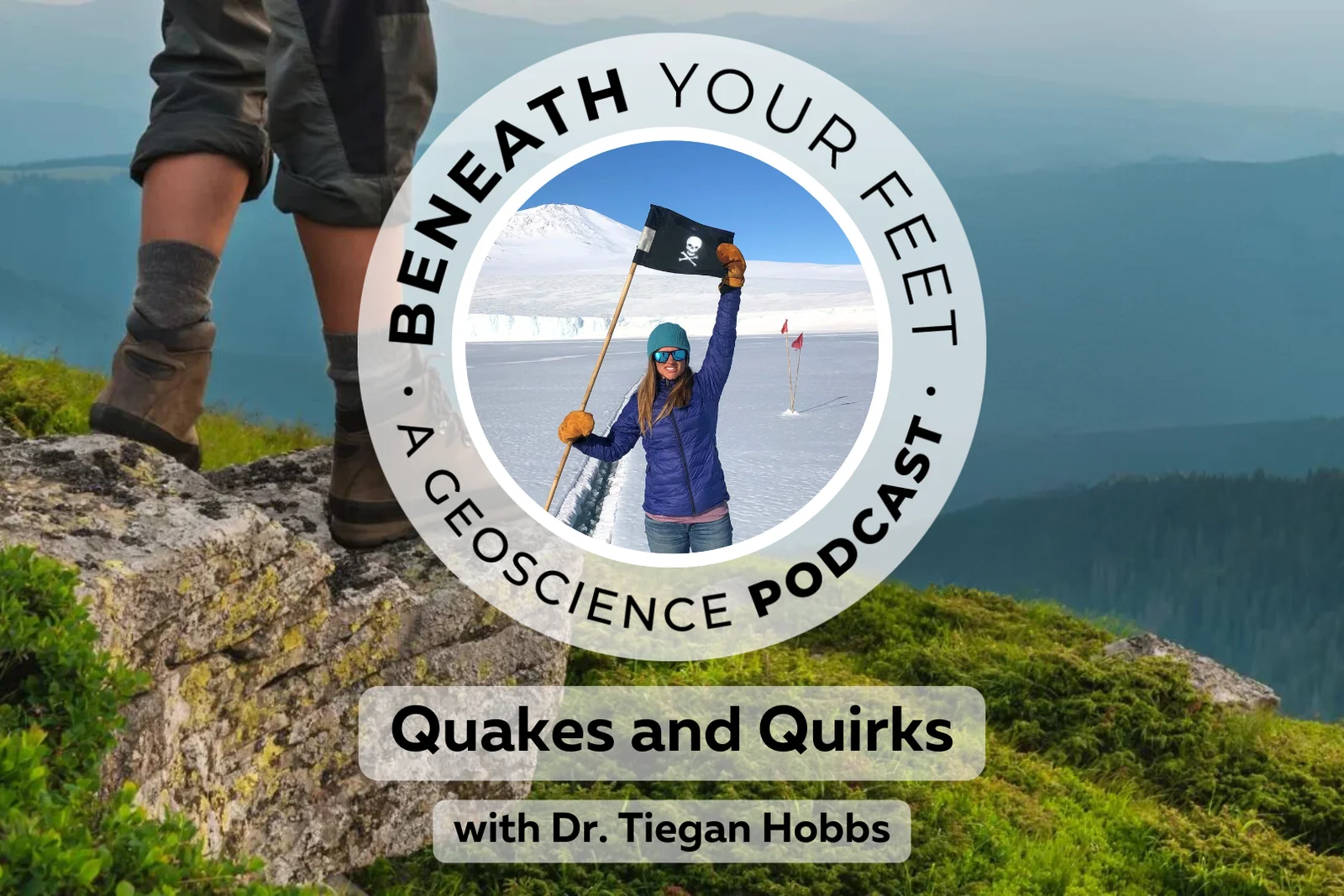
Quakes and Quirks with Dr. Tiegan Hobbs
Get in-depth with Dr. Tiegan Hobbs on all things earthquakes! Listen in as we talk about the many (many!) cool projects Hobbs has on the go that take her from answering emails at her desk, to digging an eight metre trench in the wilderness, to (very very gently) throwing seismometers off a ship to measure the ocean floor. Hobbs discusses imposter syndrome and how she takes the attitude that, even if you don’t feel like you’re ready, there’s someone else out there who is less prepared than you, and they’re going to do it anyways. So be the imposter, and do it with whimsy! Listen now: You can also listen to our podcast on these platforms: Amazon Music Apple Podcasts Spotify Read along with the podcast transcript: Introduction Hello, everyone. Welcome to Beneath Your Feet, a geoscience podcast. I’m Veronica Klassen, science communicator, geology enthusiast and your host. Here at the APGO Education Foundation, our mission is to spark curiosity and passion for the geology of Ontario. Whether you’re a geology nerd, science enthusiast, or nature lover, this podcast is for you. Join us as we geek out over fascinating geology, uncover the hidden storiesand secrets of our extraordinary planet and explore the captivating world beneath your feet. Veronica KlassenHello, everyone, and welcome to another episode of Beneath Your Feet. Today, I’m here with Dr. Tiegan Hobbs, who is a research scientist for the GSC, the Geological Survey of Canada, as well as an adjunct professor at the University of British Columbia and the University of Victoria. She is also a lead scientist for the National Seismic Risk Model, which estimates the impacts of earthquakes on buildings and people across Canada. Today we’re going to be talking about earthquakes, we’re going to be talking about faulting, plate tectonics, exciting things that we haven’t really covered in the podcast before, so I’m really excited to get into it. Thanks so much for being with me. Dr. Tiegan HobbsOh, thank you for having me. I’m really stoked. VeronicaAwesome. All right. So to start, if you want to just tell me, who are you and what do you do? TieganWho am I? What a question, its a big one. I was born in… No, I’m a research scientist, as I think you already mentioned. So my main job is I’m the lead scientist for the national seismic risk model, which is a nationwide assessment of basically what are the likely impacts from earthquakes that could occur in or near Canada. So that’s sort of my main role. And then I also work a little bit on some active faulting projects looking for evidence of active fault lines. Yeah. So overall, I would say that I’m a geophysicist and I work a little bit in some areas like geology, geomorphology and geotechnical engineering. VeronicaOkay. So what would you say your kind of niche is within that? TieganI think the area that I have developed expertise that’s like a little bit more on the rare side is probably in the world of seismic risk. In the insurance industry, they have a lot of folks who are measuring seismic risk. But in the academic side of things or like, you know, government science, it’s not necessarily an area that you have a ton of people working. And so that’s kind of the area that I would sort of consider my area of expertise that I most often get tapped for is like, oh, can you be a subject matter expert on this? Which is quite cool. I really enjoy that area and I feel like it does a really nice job of getting to blend the different areas that I’ve studied. You’re kind of combining, having to have a really good understanding of seismology and where earthquakes can occur and how big they’re going to be and how much the ground is going to shake. And then also have this understanding of like what is the built environment and how do we combine that scientific understanding with our engineering knowledge. And then even a step further to say, okay now you kind of have to have a bit of a communication perspective on–because this is very applied science, we want to make sure that we’re answering the questions that the decision makers have. And so being able to take all of that and then convey it to the people who need to understand it and get some feedback from them about like, yeah, what are the questions you have to answer in your day to day at work? And how can I make sure that the science that we’re doing is going to give you the right base of evidence to make the best decision that you can in your role. So it’s yeah, I find it’s like a really neat intersection of science, engineering and society as well. VeronicaHmm. That’s so cool. So are you working in your day to day with those policymakers and engineers? TieganKind of, yeah. Like, yeah, when I look at, what’s the roster of meetings for the week? It’s like yesterday I was talking to the National Building code some past groups in there. And then last week I had a meeting with some decision making folks out West here who are responsible for some health care assets. And they were thinking like, how are we going to make decisions right after an earthquake happens and how can we prepare ourselves to make the best possible decisions with the resources that we’ll have on hand. So being able to sort of help out with that a little bit and say like, yeah, well, here’s where the science is and here’s how it can best inform your decision making. And do the best I can to help them set them up to all to make good decisions. Yeah. And then I’ll have meetings with my engineering colleagues or, you know, working with students and yeah, it’s kind of I feel