GeoPodcast Logo

GeoPodcast

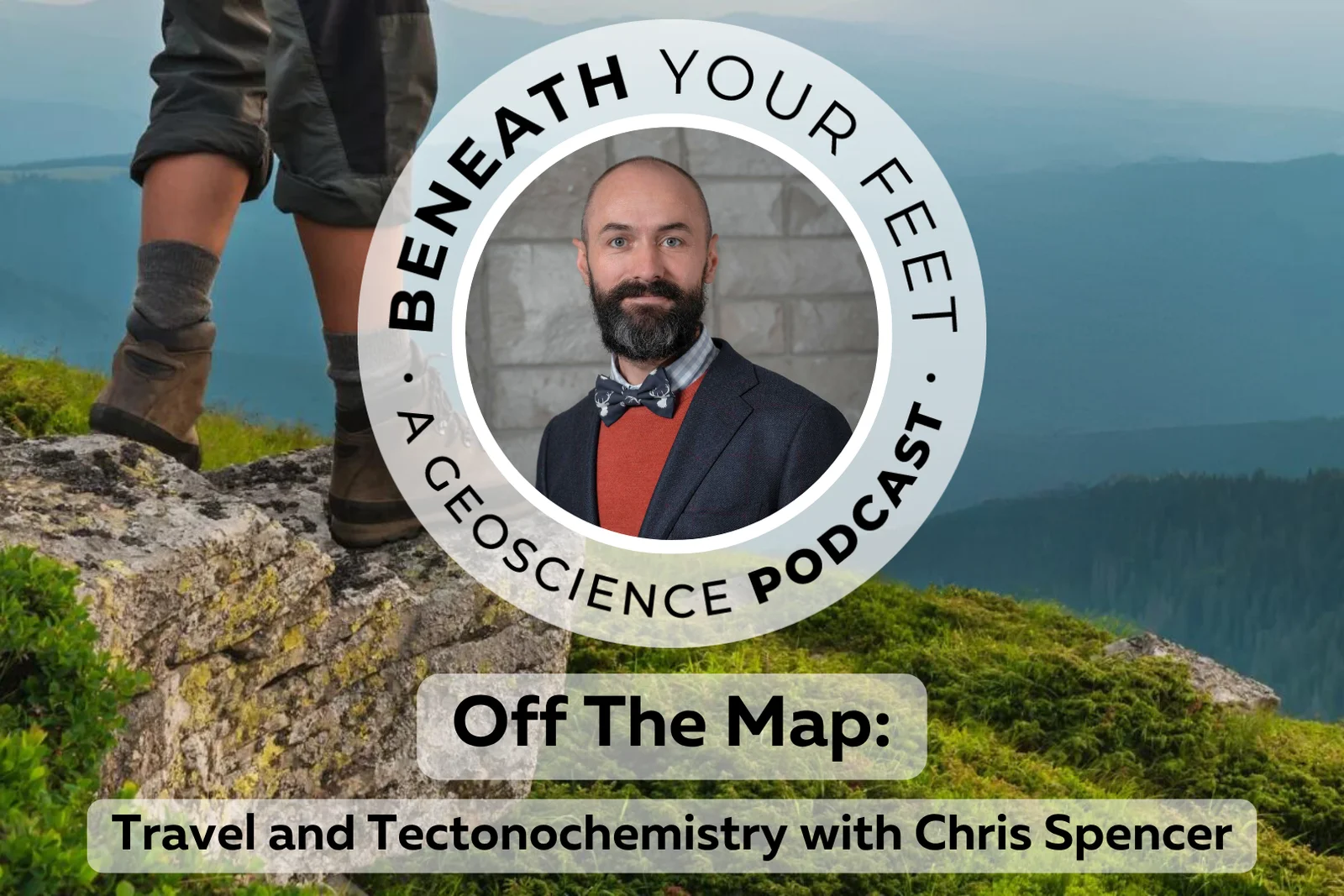
Off The Map: Travel and Tectonochemistry with Chris Spencer

From getting stranded in the middle of the desert and walking two days to the nearest town, to burning the soles of his shoes on two-week old lava, Chris Spencer is truly a well-travelled geologist and adventurer! As a professor at Queens University (the best job in the world according to Chris), he teaches field geology, helps run the geochemical facility, and does research all over the world on tectonochemistry. Listen in to hear his advice for students, fun travel stories, and passion for the earth that shows in every story he tells. Listen now: You can also listen to our podcast on these platforms: Amazon Music Apple Podcasts Spotify Read along with the podcast transcript: Introduction Hello, everyone. Welcome to Beneath Your Feet, a geoscience podcast. I’m Veronica Klassen, science communicator, geology enthusiast and your host. Here at the APGO Education Foundation, our mission is to spark curiosity and passion for the geology of Ontario. Whether you’re a geology nerd, science enthusiast, or nature lover, this podcast is for you. Join us as we geek out over fascinating geology, uncover the hidden storiesand secrets of our extraordinary planet and explore the captivating world beneath your feet. Veronica Klassen Hello, everyone, and welcome to another episode of Beneath Your Feet. Today, our guest is Chris Spencer, who is a researcher at the University of Queen’s in Kingston, Ontario. He studies tectonochemistry, which is something that I am not familiar with so I’m very excited to learn more; with a lot of research rooted in fieldwork, including lots of travel, which I’m also very excited to hear about. So thank you so much for being with me here today. Chris Spencer Happy to be here.  Veronica All right. So to get started, just tell us a bit about yourself. Who are you and what do you do? Chris My name is Chris Spencer. I am a professor of geology at Queen’s University. I’m originally from the US, but left the US about 15 years ago and did my Ph.D. and post-doc in the United Kingdom. And then I had a research position at Curtin University in Western Australia and since 2020 I have been a professor at Queen’s. Veronica And what is a day in the life look like for you? Christ Yeah. So I mean, as a professor, I think the most natural thing that I’m doing is teaching students. And so my role in the teaching program at Queen’s is primarily focused in teaching field geology. And so I teach a few different field geology courses to our students at Queen’s, just teaching them how to do things in the field, how to be a field geologist, how to read and interpret maps, how to construct maps, and how to extract information from rocks that become spatially relevant, and then how to collect samples that we can take back to the laboratory to do other tests to, I guess, evaluate the properties of those rocks. So teaching is I guess kind of my my first duty as a professor. But then I also run the geochemical facility at Queen’s with a colleague of mine. And the geochemical facility is where we have lots of different instrumentation that is used specifically to evaluate the composition of various rocks. But in addition to analyzing rocks, we also analyze a lot of biological specimens that have geologic interest. And then we’re able to then use the compositional features of various samples to understand kind of how they formed and how they have evolved through time. And so I do spend a lot of time in the laboratory working with technicians and students for the isotope facility at Queen’s.  And then the third part of my job is doing fieldwork for my own research and for the research of my graduate students. I’ve got about a dozen students that are working with me, ranging from undergraduate students all the way through to master’s and PhD students. And their research is happening all over the world. I’ve got a student who’s on a plane right now to China to do some work in China, and then I’ve got students who are working in West Africa, students who are working in Europe and South America. And so I tend to travel around a lot specifically to look at the rocks in different localities and to collect samples and then bring those samples back to my laboratory to see if I can understand better kind of when they form to how they formed and how they fit into a larger system of kind of planetary evolution, how the planet has changed over time. Veronica That’s so interesting. And can you explain a little bit like what actually is tectonochemistry? Chris Yeah, So tectonochemistry is a silly word that I that I made up to describe the research that I do because I am very interested, as I said, in the evolution of our planet and specifically the tectonic evolution. So plate tectonics is kind of what is a dominant feature that’s happening on the surface of the earth, where we have tectonic plates that are kind of floating around on the mantle. And the interactions at plate boundaries are what leads to things like volcanoes and metamorphism and earthquakes. And today we have kind of a very clear understanding of those tectonic processes. However, it is unclear how those tectonic processes have evolved over time. We think that the Earth’s mantle today is much cooler than it was billions of years ago. And so you can imagine in the same way as if you’re cooking a pot of oatmeal, if you turn the stove very high, that oatmeal is going to cook differently than if you have the stove on very low. And so my research is trying to understand how plate tectonics have evolved over time as the Earth is slowly cooling. And this also has implications for other planetary bodies like Venus and
Read More »

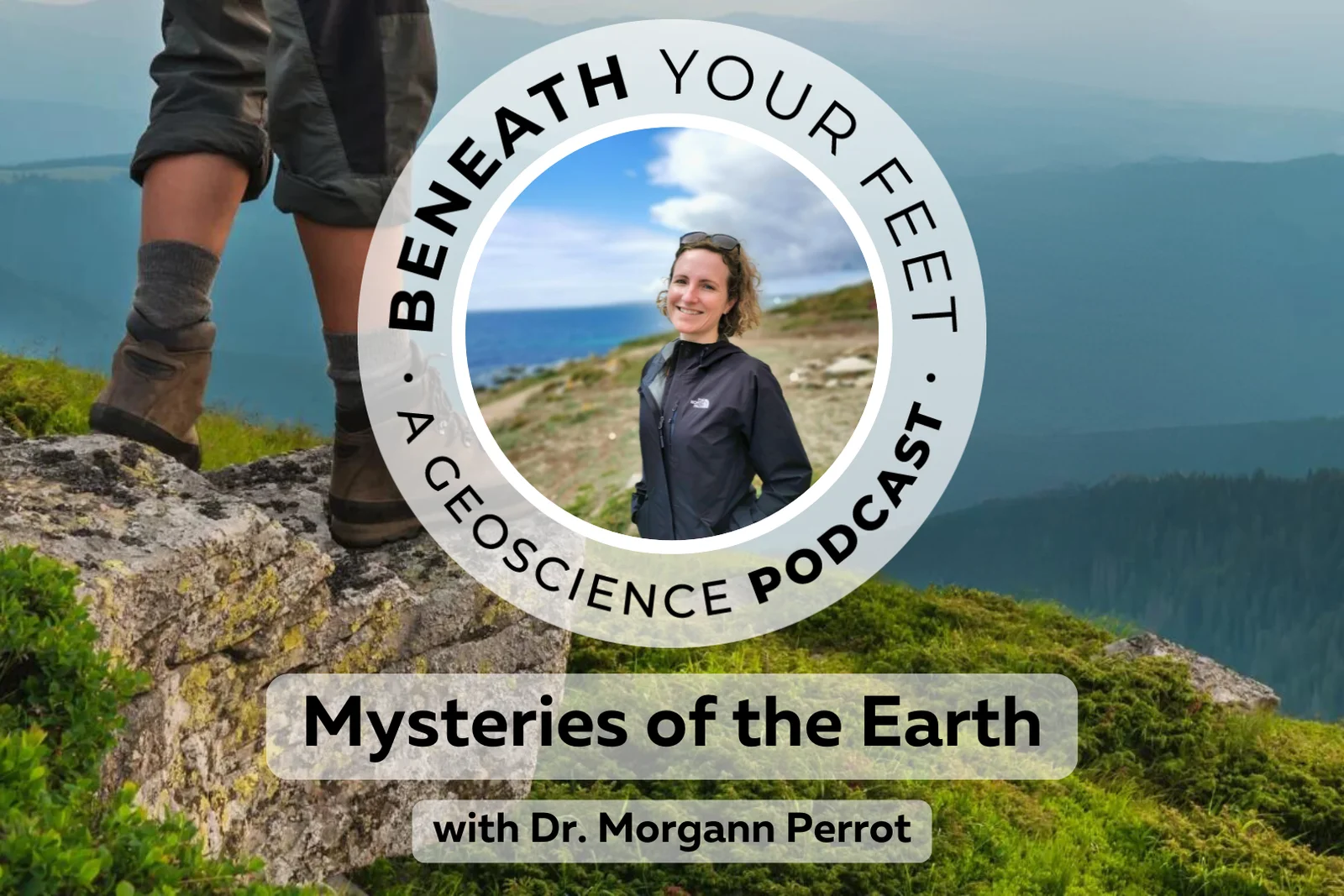
Mysteries of the Earth with Dr. Morgann Perrot

Perrot was never a hiker – she preferred to stay indoors thank you very much. It was much to her parents surprise (and hers!), when she discovered she loves geology. Her love of thriller books and murder mysteries first led her to study medical science, but she wasn’t satisfied. When she found geoscience and learned you can use science to solve mysteries of the earth, she knew that’s where she belonged. Now, Dr. Perrot explores the Appalachian mountains in the summertime, doing as much field work research as possible, and lecturing at McGill University during the rest of the year. Every day is different, and she loves the variety. Tune in to learn more about Perrot’s research and journey! Listen now: You can also listen to our podcast on these platforms: Amazon Music Apple Podcasts Spotify Read along with the podcast transcript: Introduction Hello, everyone. Welcome to Beneath Your Feet, a geoscience podcast. I’m Veronica Klassen, science communicator, geology enthusiast and your host. Here at the APGO Education Foundation, our mission is to spark curiosity and passion for the geology of Ontario. Whether you’re a geology nerd, science enthusiast, or nature lover, this podcast is for you. Join us as we geek out over fascinating geology, uncover the hidden storiesand secrets of our extraordinary planet and explore the captivating world beneath your feet. Veronica KlassenHello, everyone, and welcome to another episode of Beneath Your Feet. Today I am here with Dr. Morgann Perrot, who is a faculty lecturer at McGill University. She studies how the Earth’s crust deforms, breaks and builds mountains with a special interest in the northern Appalachians. She combines fieldwork with isotope geochemistry to piece together the tectonic history hidden in rocks. As a dedicated educator, she brings her research and field experience directly into the classroom, teaching, field mapping and structural geology related courses. I’m so excited that you’re here today with me, Dr. Morgan. Dr. Morgann PerrotHi, Veronica. It’s nice to be here with you. VeronicaSo first question, just tell us a bit about yourself. Who are you and what do you do? MorgannWell, I think you did a good synthesis of what I’m doing and that. So, yeah, I’m a lecturer at McGill University. I’m teaching structural geology, geology in the field. So also a field course about geology. So it’s a lot of geology courses that are linked to going outside, understanding rocks, how they deform when they are under pressure and stress and trying to understand this. And so this is linked to the how mountains are forming and deforming, actually. I’m teaching these courses and on the side I’m also doing some research about deformation too. So looking at how rocks will fold, crack. When do they do that? Looking at around us if we see some deformation and when did that happen? Because the earth is quite old, more than 4.5 billion years old. So some rocks have been deformed for billions of years. Some rocks are deforming just right now under our feet. So yeah, the question is when did that happen and why? So that’s the question I’m trying to answer. VeronicaOkay, that sounds super interesting. So what does a day in the life look like for you? MorgannI guess it really depends on the season, and that’s what I like about my job. Over a year things really change. So for example, during summer I’m going to do more fieldwork, I’m going to go outside. Especially being a researcher in Canada doing fieldwork, looking at rocks during winter, it’s not really possible. Well, especially because my research is also in Canada mostly, so when there is a lot of snow, it’s not really easy. So yeah, we’re doing field work mostly in the summer, so I concentrate my summers doing research, going outside in the fields, but also bringing back rocks in the lab and doing lab work. During fall and winter, I’m more teaching so I’m more in McGill with students, so I’m doing a lot of courses relating to going outside too. So we’re trying to deal with the weather. So when it’s nice weather, we’re going outside in the field. When it’s more snowy or cold, we stay inside and do more theoretical lectures, you know? So every day I’m going to do a bit of, you know, reviewing articles for colleagues, for other students, helping students to look at their thesis, master thesis, PhD thesis. Doing some tasks in the department and some colleagues need some help and support and yeah things like that. What’s fun is that there was not one day where I do the same thing, so I can’t really describe a really ideal day, you know, it changes everyday. VeronicaRight? Yeah, Yeah. There’s a lot of variety that’s awesome. And so are you doing your own research as well or you just like supervising research? How does that all work? MorgannYeah, so my main job as a lecturer is to teach. So I teach most of the semester, every semester, but on the side I’m also involved in some research projects. So it depends. There is some projects that I lead myself for myself mainly for my own interest, but there is also some project in which I’m involved with students for their masters thesis, for their PhD thesis. I’m not the principle supervisor of students at the moment. I just started at McGill. But I’m involved as collaborator in projects like this. I also, so what I’m trying since I started in McGill is to, every summer have an undergrad student working with me to do some initiation, to research, to be in the field, to do a bit of lab work. And I find this very important for students to discover really early on what is research and do they want to continue into masters or not, or into PhDs or not? VeronicaYeah, that’s really awesome and I think really useful for students hopefully to figure

Read More »

Quakes and Quirks with Dr. Tiegan Hobbs

Get in-depth with Dr. Tiegan Hobbs on all things earthquakes! Listen in as we talk about the many (many!) cool projects Hobbs has on the go that take her from answering emails at her desk, to digging an eight metre trench in the wilderness, to (very very gently) throwing seismometers off a ship to measure the ocean floor. Hobbs discusses imposter syndrome and how she takes the attitude that, even if you don’t feel like you’re ready, there’s someone else out there who is less prepared than you, and they’re going to do it anyways. So be the imposter, and do it with whimsy! Listen now: You can also listen to our podcast on these platforms: Amazon Music Apple Podcasts Spotify Read along with the podcast transcript: Introduction Hello, everyone. Welcome to Beneath Your Feet, a geoscience podcast. I’m Veronica Klassen, science communicator, geology enthusiast and your host. Here at the APGO Education Foundation, our mission is to spark curiosity and passion for the geology of Ontario. Whether you’re a geology nerd, science enthusiast, or nature lover, this podcast is for you. Join us as we geek out over fascinating geology, uncover the hidden storiesand secrets of our extraordinary planet and explore the captivating world beneath your feet. Veronica KlassenHello, everyone, and welcome to another episode of Beneath Your Feet. Today, I’m here with Dr. Tiegan Hobbs, who is a research scientist for the GSC, the Geological Survey of Canada, as well as an adjunct professor at the University of British Columbia and the University of Victoria. She is also a lead scientist for the National Seismic Risk Model, which estimates the impacts of earthquakes on buildings and people across Canada. Today we’re going to be talking about earthquakes, we’re going to be talking about faulting, plate tectonics, exciting things that we haven’t really covered in the podcast before, so I’m really excited to get into it. Thanks so much for being with me. Dr. Tiegan HobbsOh, thank you for having me. I’m really stoked. VeronicaAwesome. All right. So to start, if you want to just tell me, who are you and what do you do? TieganWho am I? What a question, its a big one. I was born in… No, I’m a research scientist, as I think you already mentioned. So my main job is I’m the lead scientist for the national seismic risk model, which is a nationwide assessment of basically what are the likely impacts from earthquakes that could occur in or near Canada. So that’s sort of my main role. And then I also work a little bit on some active faulting projects looking for evidence of active fault lines. Yeah. So overall, I would say that I’m a geophysicist and I work a little bit in some areas like geology, geomorphology and geotechnical engineering. VeronicaOkay. So what would you say your kind of niche is within that? TieganI think the area that I have developed expertise that’s like a little bit more on the rare side is probably in the world of seismic risk. In the insurance industry, they have a lot of folks who are measuring seismic risk. But in the academic side of things or like, you know, government science, it’s not necessarily an area that you have a ton of people working. And so that’s kind of the area that I would sort of consider my area of expertise that I most often get tapped for is like, oh, can you be a subject matter expert on this? Which is quite cool. I really enjoy that area and I feel like it does a really nice job of getting to blend the different areas that I’ve studied. You’re kind of combining, having to have a really good understanding of seismology and where earthquakes can occur and how big they’re going to be and how much the ground is going to shake. And then also have this understanding of like what is the built environment and how do we combine that scientific understanding with our engineering knowledge. And then even a step further to say, okay now you kind of have to have a bit of a communication perspective on–because this is very applied science, we want to make sure that we’re answering the questions that the decision makers have. And so being able to take all of that and then convey it to the people who need to understand it and get some feedback from them about like, yeah, what are the questions you have to answer in your day to day at work? And how can I make sure that the science that we’re doing is going to give you the right base of evidence to make the best decision that you can in your role. So it’s yeah, I find it’s like a really neat intersection of science, engineering and society as well. VeronicaHmm. That’s so cool. So are you working in your day to day with those policymakers and engineers? TieganKind of, yeah. Like, yeah, when I look at, what’s the roster of meetings for the week? It’s like yesterday I was talking to the National Building code some past groups in there. And then last week I had a meeting with some decision making folks out West here who are responsible for some health care assets. And they were thinking like, how are we going to make decisions right after an earthquake happens and how can we prepare ourselves to make the best possible decisions with the resources that we’ll have on hand. So being able to sort of help out with that a little bit and say like, yeah, well, here’s where the science is and here’s how it can best inform your decision making. And do the best I can to help them set them up to all to make good decisions. Yeah. And then I’ll have meetings with my engineering colleagues or, you know, working with students and yeah, it’s kind of I feel

Read More »
Joana Rodrigues smiles at the camera in front of the ocean. Text reads: From Rocks to Oranges. How to find geology everyday with Joana Rodrigues

From Rocks to Oranges with Joana Rodrigues

Learn how geology is everywhere with Joana Rodrigues! In this episode we talk to Joana Rodrigues, a Portuguese UNESCO expert in geoheritage and geoscience communication. Joana shares her journey from teaching to working in geoparks, where she engages diverse audiences in understanding geodiversity, the non-living elements of nature like rocks, soils, and geological processes. She discusses her PhD research on improving science communication in geoparks, highlighting the need for strategic, audience-focused, and emotionally engaging approaches. Joana emphasizes that geology is deeply connected to everyday life, from food and water to natural hazards, and advocates for shifting public perception to see geoscience as essential for sustainability and environmental solutions.

Read More »

Contamination Clean-Up with Mark Priddle

In this episode, Mark Priddle, P.Geo., shares insights from his career in environmental geoscience, reflecting on both the challenges and highlights along the way. He offers practical advice for students and discusses how geoscience is perceived in society today, from environmental responsibility to professional practice. Listen now: You can also listen to our podcast on these platforms: Amazon Music Apple Podcasts Spotify Read along with the podcast transcript: Introduction Hello, everyone. Welcome to Beneath Your Feet, a geoscience podcast. I’m Veronica Klassen, science communicator, geology enthusiast and your host. Here at the APGO Education Foundation, our mission is to spark curiosity and passion for the geology of Ontario. Whether you’re a geology nerd, science enthusiast, or nature lover, this podcast is for you. Join us as we geek out over fascinating geology, uncover the hidden storiesand secrets of our extraordinary planet and explore the captivating world beneath your feet. Veronica Klassen Hello, everyone, and welcome to another episode of Beneath Your Feet. Today, I’m going to be interviewing Mark Priddle, who is a senior environmental geoscientist with a consulting firm in Ottawa, as well as a part time farmer and full time grandpa, thanks so much for joining me today, Mark. Mark Priddle Oh, I’m looking forward to it. Thank you. Veronica All right. So let’s just jump right in. Why don’t you tell us a bit about yourself? Who are you and what do you do? Mark Yes, I’m an environmental geoscientist and I’ve been practicing in the field for over 40 years. Right now, I’m working about three days per week for a multinational engineering firm. But over the past 40 years, I’ve worked for two different federal government departments here in Ottawa and three different consulting firms. And those ranged in number of personnel from about 20 to now 22,000. Veronica Wow.  Mark My focus in work these days is on hydrogeology. So water from the rocks, looking at water supply. Again, a good portion of the world’s population relies on groundwater as opposed to surface water.  Also, dewatering. There’s a lot of construction projects, many, many construction projects require water to be pumped out of the ground to enable the construction and also water quality issues. In addition, I work a lot in contaminated site assessment and cleanup with lots of historical contaminated sites, even some fairly modern day ones. And work on that to help improve the environments and redevelop properties and so forth. And I have a few interesting multi-disciplinary projects related to abandoned mine sites, as well as green energy, and that includes solar farms and battery energy storage. So that’s sort of what I’m up to these days. Veronica Okay. That’s a lot of different things. So what exactly does a day in the life look like for you? What are you doing both when you’re in the office or when you’re out in the field or working on different projects? What does that look like? Mark Yeah. So I’m really blessed to work in a quite a wide variety of scenarios in my day to day job. I do spend about half my time in front of a computer and that involves analyzing data, writing reports, corresponding, keeping in touch with my colleagues, clients, regulators and so forth. But I still get out to do work in the field for environmental side assessments, testing soil and groundwater and other other things in the field. Also, I spend a fair bit of time with clients, regulators, public meetings to discuss projects, answer questions, plan various projects. So I do have a great variety and I think that’s one of the things that I really like about my profession. And geoscience in general, you get sort of all three aspects: sitting in the office using your mind, in the field doing physical things, and also testing your mind as well as interacting with the public and colleagues and, and regulators. Veronica Yeah, yeah. That’s what I love about geoscience. I feel like you can really kind of choose your own adventure a little bit depending on what you’re most interested in. If you want to spend more time in the office, you can absolutely find a job that’s like entirely office work. If you want to spend more time in the field, like there’s lots of opportunities for that too. And so yeah, it’s kind of cool that way.  But I’m curious how you ended up where you are. How did you originally become interested in geology or geoscience? Mark So, so I took a little bit of a roundabout way. In high school I enjoyed and was successful in chemistry. So I headed off to university to study chemistry. But my first work term, just after four months of school, with the federal government in a groundwater contamination group at Environment Canada. And during that time I worked with some really good seasoned geoscientists and sort of things proceeded from there. I worked for a few years as a chemist or a geochemist before getting a master’s degree in groundwater studies. And then it’s been pretty much strictly environmental geoscience since that time. So a little bit of a roundabout way. I always did like the Earth and things related to the Earth, so that’s how I ended up in geoscience. Veronica Cool, cool, cool. Yeah, I find that’s the case with a lot of people that I talk to as well, that yeah, it’s isn’t always exactly clear. Like when you were a kid, did you kind of think you wanted to be a chemist or a geochemist? Mark So I definitely like the sciences. I wasn’t sure what it was going to be and not strongly interested in rocks. I didn’t ever have a rock collection until I was kinda working in my consulting job. Veronica Hmm. Interesting. Yeah, that’s quite cool, because I feel like a lot of people assume that, like, if you don’t like a super

Read More »
Headshot of Tanya Harrison. Text reads: "Beneath your feet, a geoscience podcast. A martian lens with Dr. Tanya Harrison."

A Martian Lens with Dr. Tanya Harrison

Join us as we explore an exciting new topic for our podcast — planetary science! From Martian landscapes to icy plumes on distant moons, Dr. Tanya Harrison explains how cameras help us explore other worlds and what those images reveal about the potential for life beyond Earth. Listen now: You can also listen to our podcast on these platforms: Amazon Music Apple Podcasts Spotify Read along with the podcast transcript: Introduction Hello, everyone. Welcome to Beneath Your Feet, a geoscience podcast. I’m Veronica Klassen, science communicator, geology enthusiast and your host. Here at the APGO Education Foundation, our mission is to spark curiosity and passion for the geology of Ontario. Whether you’re a geology nerd, science enthusiast, or nature lover, this podcast is for you. Join us as we geek out over fascinating geology, uncover the hidden stories and secrets of our extraordinary planet and explore the captivating world beneath your feet. Veronica Klassen Hello, everyone, and welcome to another episode of Beneath Your Feet, the geoscience podcast where we talk to geologists of all different kinds in order to hear their career stories, advice for students and just fun, exciting things that are going on in geology today. We are branching out to a topic that we haven’t explored yet on the podcast, and that is planetary science. So today we’re going to be talking to Dr. Tanya Harrison, who is a professional Martian. She is currently a fellow of the Outer Space Institute and the director of Earth and Space Science at the Canadian Space Company, Mission Control, based out of Ottawa. She is a planetary scientist, future focused science strategist, author and one of the world’s go-to voices on Mars and space exploration. So thank you so much for being with me here today, Tanya.  Dr. Tanya Harrison Oh, thanks, so much for having me. Veronica Let’s just start with a little intro. Tell us about yourself. Who are you and what do you do? Tanya Oh, gosh, I don’t know how to follow up the bio. Veronica Yeah, true. Tanya In terms of what do I do right now, so my background is in planetary science, like you said. I feel like a lot of folks have never heard of that term, if you are not a planetary scientist. So basically a geologist, but studying other planets. And in that process, especially if you’re studying rocky bodies like Mars or the Moon or Mercury, you have to understand geologic processes on the Earth first, because we see all the same stuff when we look at these places. Veronica Right. Tanya Well, for the most part. We can get into that later. There’s some cool stuff on other planets that we don’t see here. So yeah, you can take your geology background and then apply that to studying things like impact craters on the moon or volcanoes on Mars, or weird cracks in the surface on Venus. And I think that’s pretty cool. Veronica That’s so awesome! Wow. Okay, so what does a day in the life look like for you? Tanya So right now I work for a commercial space company called Mission Control as their director of Earth and Space Science. And so some of it is doing science, but more focused on what do we need to do to design instruments and missions to achieve specific science goals. So, if you’re trying to answer certain questions, say, and you need images to answer those questions, you want pictures, you know you want a camera, but what resolution should that camera be? What wavelengths of light should it be imaging at? And probably most importantly for space, how do you get it into the constraints of mass, power, and cost that you have for your mission, which are usually very, very tough to do. So you come in with these huge dreams about all these things you would want to do as a scientist. You want all the answers, right? But then at the end of the day, you come back with like, you know, one tenth of what you were dreaming you could do because of all the constraints that space and budgets put on you. Veronica Yes, oh, my gosh, that’s totally fair. So, yeah, essentially you’re just like, what can we do, what questions can we answer? What can we do with the time and money and space that we have, which I imagine is quite the challenge. Tanya Definitely. And then you work with engineers to actually build this. I am not an engineer at all. Veronica Right, okay. Tanya And the engineers aren’t planetary scientists, so they won’t know without somebody telling them, ‘Hey, we need something that can do this,’ then they can go and build it. And then usually that’s another meeting of the minds in the middle, like, what do the scientists dream of? And then what do the engineers tell you is possible. So it’s so it ties really well, I guess, to the idea of science communication in general, because you’re communicating with people of a ton of different backgrounds to try to get a mission to actually happen. Veronica Right. What is your specific niche or area of interest within planetary science? I know you’re working on technology like cameras and things like that. Would you say that’s kind of your niche where you find yourself? Tanya Yes, like cameras and camera operations, but more on the geology side in particular, my background was in landslides. And really, any way that something can fall down a hill. Because there’s a lot of different ways something can fall down a hill, whether that’s a landslide or a glacier flowing down a slope, because there are what we think are dust covered glaciers on Mars, as well as the remnants of where glaciers used to be and they’ve left some stuff behind that is very indicative of the glaciers having been there in the past. 

Read More »
Headshot of Joanna Northover over image of a hikers boots and mountain landscape. Text reads: Beneath Your Feet. A Geoscience Podcast. FossilTok with Joannasaurus.

FossilTok with Joannasaurus

In our latest episode, we speak with @Joannasaurus — a paleontologist and science communicator who’s using TikTok to make fossils fascinating for everyone. Joanna talks about what it takes to make complex science accessible, the role of humour in online storytelling, and her roundabout journey to paleontology! Listen now: You can also listen to our podcast on these platforms: Amazon Music Apple Podcasts Spotify Read along with the podcast transcript: Introduction Hello, everyone. Welcome to Beneath Your Feet, a geoscience podcast. I’m Veronica Klassen, science communicator, geology enthusiast and your host. Here at the APGO Education Foundation, our mission is to spark curiosity and passion for the geology of Ontario. Whether you’re a geology nerd, science enthusiast, or nature lover, this podcast is for you. Join us as we geek out over fascinating geology, uncover the hidden storiesand secrets of our extraordinary planet and explore the captivating world beneath your feet. Veronica KlassenWell, welcome, everyone, to another episode of Beneath Your Feet. Today, I’m going to be talking to Joanna Northover, who is a science communicator on TikTok. We’re going to be talking about science communication, we’re going to talk about her career in geoscience, we’re going to talk about advice for students and all kinds of exciting things. So thanks so much for joining me, Joanna. JoannaNo problem. It’s my pleasure. It’s going to be a lot of fun. VeronicaAmazing. I’m very excited. All right. So why don’t we just start. Tell me a bit about yourself. Who are you and what do you do? JoannaAll right. Well, as you said, my name is Joanna Northover, but on TikTok, Instagram and YouTube, I go by Joannasaurus and I am a science communicator. But I started out interested in paleontology. So my science communication really centers around paleontology. So fossils, dinosaurs, things like that. And I have loved paleontology for as long as I can remember. And so it was sort of, I had a few stumbles along the way. We’ll probably talk about that later on. But I did do a master’s degree and an undergraduate degree in paleontology. But then I fell in love with science communication, and the rest, as they say, is history. VeronicaThat’s awesome. So yeah, so going a bit back, how did you originally become interested in paleontology and how has that journey sort of changed for you over time? JoannaAll right. So I guess a lot of people go through a dinosaur phase when they’re kids, and I was no exception. My was quite early. I really loved dinosaurs, even at a very young age and as young as the age of four, I declared that I was going to become a paleontologist. And that was a dream that I held for a very, very long time until I hit my teens. And, you know, I kind of got a little discouraged. I thought maybe this wasn’t a practical career, you know, And I thought, oh, well, maybe I’ll be a teacher instead, because I also really loved teaching. Even from a young age. I used to pretend to teach my little brother, you know, with a pointing stick and some little diagrams and stuff. And so when I was in high school, you know, I kind of pivoted a bit and I thought, Oh, I’ll do a degree, and then I’ll go to Teachers College. And I had really good marks in history and chemistry. So that’s what I applied to. I did actually apply to paleontology as well, and I got in at UofT, but I was too nervous to move all the way there because at the time I was one of the first years to do that double cohort thing where, you know, in Ontario we went from having grade 13 to going to grade 12. And so I was 17 when I graduated. I wasn’t even a legal adult, and I just felt like really nervous about going too far away from home all by myself. VeronicaCause where is home for you, sorry? JoannaOttawa. I grew up in Ottawa and that’s where I live now, so I didn’t want to go too far away from home. So I decided I would go to university at Ottawa U. And I decided to go into history and I did my first year of history and I dropped both of my history courses. So I was like, Wow, wow, this isn’t the right major. And I was like, well, maybe I made a mistake here, so that’s not a good sign. So I had done actually a first year geology course as one of my breadth courses when I was at Ottawa U. I’d also taken a lot of philosophy and I almost switched to a major in philosophy. My mom actually, of all people, said, Did you know that Carleton has just started a vertebrate paleontology concentration from the Earth Science Department? And so I applied right away. I switched over. I thought, you know what? I knew more when I was four than I know now. I just I’ll go to school and I’ll figure it out after. I’ll just, I have to study something I love or else this is going to be a disaster. And so I transferred over to Carleton and I started in the Earth Science department there doing my vertebrate paleontology concentration. And it was just magical. Suddenly it was easy to go to school. I wasn’t dropping my courses. I had so much fun. The department there was great, really supportive, and I liked it so much that after I did my bachelor’s degree, I ended up deciding to stay and do a graduate degree. I did a master’s degree also at Carleton. But while I was doing my bachelor’s and master’s, I started working in the summers at the Royal Tyrrell Museum of Paleontology, where I was working in the Science Education Department. And also I did some science education sort

Read More »
A hiker stands on the top of an outcrop looking over a distant mountain scene. Text reads: "Beneath Your Feet. A geoscience podcast."

Rocky the Raccoon Children’s Book: Interview with Katie Maloney and Alexander Young

In this episode, I sit down with author Katie Maloney and illustrator Alex Young to talk about their brand-new children’s book Rocky the Raccoon Explores the Niagara Escarpment, which is directly aligned with the Grade 4 Ontario science curriculum. We dive into the art of science communication—how to take complex ideas and transform them into fun, accessible stories that spark curiosity. Katie and Alex share what it was like to bring Rocky to life, from the creative process of writing and illustrating to the challenges of making geology engaging for kids. We also discuss why it’s vital for scientists to share their work with the public, and how teachers can use Rocky the Raccoon as a classroom resource. Listen now: You can also listen to our podcast on these platforms: Audible Apple Podcasts Spotify Read along with the podcast transcript: Introduction Hello, everyone. Welcome to Beneath Your Feet, a geoscience podcast. I’m Veronica Klassen, science communicator, geology enthusiast and your host. Here at the APGO Education Foundation, our mission is to spark curiosity and passion for the geology of Ontario. Whether you’re a geology nerd, science enthusiast, or nature lover, this podcast is for you. Join us as we geek out over fascinating geology, uncover the hidden storiesand secrets of our extraordinary planet and explore the captivating world beneath your feet. Veronica Klassen Hello, everyone, and welcome to another episode of Beneath Your Feet. Today I’m going to be talking to Katie Maloney and Alex Young, who’ve been writing and illustrating a children’s book about the geology of the Niagara Escarpment. Rocky The Raccoon, which is out now, is a story about a raccoon exploring the Niagara Escarpment, learning about geology and the environment. The goal of the book is to educate, inspire kids to get outside and explore the natural environment. So thank you guys so much for joining me. Why don’t you start by telling me a bit about yourselves? Who are you and what do you do? Katie Maloney So I’m Katie Maloney. I am a paleontologist and I’m currently a Rebanks fellow at the Royal Ontario Museum, so studying some of the fossils in their collection. I did my Ph.D. and Master’s at University of Toronto and my undergrad at McMaster, and then I did a short post-doc at McMaster, kind of working on this project and another postdoc at McGill University, working up in the Arctic on some older fossils that are about a billion years old. And I’ll be starting at Michigan State this August. Alexander Young And my name is Alex Young. I’m a biomedical communicator and freelance medical illustrator, which doesn’t necessarily mean a ton, we’ll get into what those mean probably later on in the podcast. But broadly, I would consider myself a scientific communicator that focuses on visuals. And so Katie asked if I could help illustrate this book, bring Rocky to life. And given the fact that I can draw most of the time, and also I am able to relatively accurately convey that science because of my background, that’s why I got brought onto the project. And why I can do the things accurately? Well, I did my Master’s at UofT in medical illustration and science communication, and prior to that I did my undergrad at Mac in Integrated Science, which is actually where I met Katie and Carolyn, the other co-author on the book. So, yeah. Veronica Perfect. Thanks so much, guys. So I am so excited to hear about this book that you are working on. So how did this project come about? Where did the idea originally start? Katie So the idea for the book originally started when I was a Mitacs postdoctoral fellow at McMaster University, and so we had a project working on geoscience communication, trying to sort out how we could have people be more engaged with the Niagara Escarpment, since it affects everyone’s everyday lives throughout the Hamilton Niagara area. And so the project originally started with several undergraduate students who were supposed to work in a lab during COVID. And then when the COVID pandemic hit, they were not allowed in the lab space at McMaster University. So instead what they did is they rode their bikes along the Niagara Escarpment and picked out different areas of interest. So the project was in motion long before I joined. But when I joined in 2022, it was a lot of putting the data that these students had gathered over several years together and making it accessible for the public. And then Deana, who works for the APGO Education Foundation, puts all this fantastic information and data into these story maps that people can access online and use to have a virtual guide to these trails. Veronica Okay, awesome. And how did you get connected to this Alex? Alex So I got brought in as an illustrator once they got sort of some funding and the project evolved into, you know, how can we make this a more engaging experience to introduce the topics and the subject matter to the school system as well. And sort of with a focus on, you know, local schools that are adjacent to the Niagara Escarpment, but beyond that, as well what would be useful for Ontario students given the curriculum and what they’re taught about earth sciences at the elementary school level. And once they realized that they wanted to do an illustrated book that could connect to elementary school students, then Katie and Carolyn co-author got in touch. They knew that I had been in ISci with both of them, Carolyn was our prof, and then I had sort of moved into this capacity as a medical illustrator and they thought that it would be a good fit for the book. And then it became a very fun mash up of like personal, because obviously I have so much respect for Katie and Caroline and being able to work with them again is

Read More »
A hiker stands on the top of an outcrop looking over a distant mountain scene. Text reads: "Beneath Your Feet. A geoscience podcast."

Fundy’s Fossil Coast: Special Episode with Dr. Jade Atkins and Danielle Serratos on the Bay of Fundy

Join host Veronica Klassen in Nova Scotia for this special episode on location at the Bay of Fundy! Dr. Jade Atkins, Curator and Director of Science Research at Joggins Fossil Cliffs, and geologist Danielle Serratos, Curator and Director of the Fundy Geological Museum, reveal the region’s one-of-a-kind fossils and dramatic geologic history. Along the way, they share the twists and turns of their unconventional paths into paleontology—and offer candid, inspiring advice for students and anyone charting their own career journey. Listen now: Spotify Amazon Music Apple Podcasts Read along with the podcast transcript: Introduction Hello, everyone. Welcome to Beneath Your Feet, a geoscience podcast. I’m Veronica Klassen, science communicator, geology enthusiast and your host. Here at the APGO Education Foundation, our mission is to spark curiosity and passion for the geology of Ontario. Whether you’re a geology nerd, science enthusiast, or nature lover, this podcast is for you. Join us as we geek out over fascinating geology, uncover the hidden storiesand secrets of our extraordinary planet and explore the captivating world beneath your feet. Veronica Klassen Hello, everyone, and welcome to another episode of Beneath Your Feet. Today is a super exciting day and one that I have been looking forward to for a long time because I’m actually here in Nova Scotia visiting the Bay of Fundy, which has the world’s highest tides, as well as the oldest dinosaur fossils in Canada. Danielle And even more importantly since we’re here at Joggins… Jade We have the world’s oldest amniota reptile fossil. Veronica Well there you go! Today, I’m going to be talking to Dr. Jade Atkins, who is the Curator and Director of Science Research at Joggins Fossil Cliffs, as well as geologist Danielle Serratos, director and curator at the Fundy Geological Museum. Today we’re gonna be talking about the really unique geology of the Bay of Fundy area. We’re going be talking about life advice, career advice, some common misconceptions about geology and paleontology, and so much more. So thank you so much you two for agreeing to be on the podcast. Danielle Thanks for having us. Veronica Awesome. Let’s jump right into it. So start just by telling us a bit about yourself. Who are you and what do you do? Jade Okay, so I’m Jade. I am not actually a geologist. I am a biologist that learned geology on the job. Veronica Okay fun. Jade At every sort of point in my career, I gained a little more geology knowledge, but I do have a biological background, so I approach fossils from a little bit of a different perspective than than your average paleontologist I think. Danielle And, Danielle speaking here, I am more of the stereotypical paleontologist. I grew up in North Texas, so I was surrounded by some really fantastic fossil sites and loved it from an early age. I went to University for my Undergrad, have a degree in Geology. Then went on to Grad school and became a specialist in marine reptile paleontology. Veronica Wow. That’s awesome. All right. Do you mind telling us a bit more about your respective organizations and what they do? Jade Absolutely. Yeah. So the Joggins Fossil Cliffs is a UNESCO World Heritage site. We were inscribed in 2008. And the reason for our inscription is that this is the best and most complete record of the late Carboniferous that you can find in the world. So it’s 15 kilometers looking out any window kind of in any direction at this point of a cliff face that has fossils is very fossiliferous. Sort of twice a day the tides come and they rework the beach and also the cliffs, and we have new findings every day. Danielle So I work at the Fundy Geological Museum. It’s in Parrsboro, about forty-five minutes from Joggins, where we are right now. We are a part of the Nova Scotia Museum. So, Nova Scotia has the largest most decentralized museum system in Canada. Veronica Wow. That’s a lot. Danielle Yeah. Most of them are heritage homes, but the Fundy Geological Museum was established in 1993, so we just celebrated our thirty-first year, thirty-second, something like that. I can do simple math. Our mission and mandate is to record Nova Scotia’s geological history, specifically around the Bay of Fundy. Because we’re situated on the North shore of the Minas basin, that is primarily where we collect fossils and minerals and do our research, however, because we are Nova Scotia’s geological museum, like the provincial museum, we also have specimens from all over the province. Jade Including from here. Danielle Yep. Jade. You do have some specimens from the Joggins formation. But that’s fine, fossils from the Joggins formation are found all over the world. Veronica They travel a lot? Jade They did. They are more well travelled than I am. Veronica That is awesome. And how did both of you end up here? So what was the spark that started you on this journey exploring rocks and fossils? And why did you end up here specifically? Jade It was a complete accident for me. I was not into, I was not into geology. I was not really into rocks as a kid. I wasn’t really into nature either. I didn’t meet a scientist. I’m from rural Nova Scotia. I didn’t meet a scientist until I went to university. So I went to university wanting to be a medical doctor because that is all I saw.Those were the people doing science in my community. Were teachers, and I knew I didn’t want to be a teacher, although I do teach now, and medical doctors and nurses. And I thought, okay, I could do that. And then I took a biology course in my first year and I am dating myself a bit. But Tiktaalik had just been found. Veronica Sorry just for the non geologists, do you mind just explaining quick what Tiktaalik is? Jade Yes. So Tiktaalik is called a fishapod

Read More »
A hiker stands on the top of an outcrop looking over a distant mountain scene. Text reads: "Beneath Your Feet. A geoscience podcast."

PODCAST EPISODE #6: From Extraction to Innovation with Mary-Anne Hildebrandt

Summary In episode 6 of Beneath Your Feet, A Geoscience Podcast, host Veronica Klassen interviews resource geologist Mary-Anne Hildebrandt. Mary-Anne discusses her roundabout path to geoscience, unique career journey, and focus on sustainability throughout her career. Mary-Anne and Veronica discuss the perception of geoscience as a ‘fluffy’ science and how including geoscientists in conversation can benefit organizations. Mary-Anne provides insight into the role of geoscience in moving from a linear to a circular economy and how understanding the energy and value of a consumable good can help us to waste less. Listen now: You can also listen to our podcast on these platforms: Spotify Audible Apple Podcasts Read along with the podcast transcript: Introduction Hello, everyone. Welcome to Beneath Your Feet, a geoscience podcast. I’m Veronica Klassen, science communicator, geology enthusiast and your host. Here at the APGO Education Foundation, our mission is to spark curiosity and passion for the geology of Ontario. Whether you’re a geology nerd, science enthusiast, or nature lover, this podcast is for you. Join us as we geek out over fascinating geology, uncover the hidden storiesand secrets of our extraordinary planet and explore the captivating world beneath your feet. Veronica Klassen: Hello everyone and welcome to another episode! Today I’m going to be talking to Mary-Anne Hildebrandt, a resource geologist and past president of PGO. Mary-Anne has a BSc in Geological and Earth Sciences, a BA in Political Studies, and a Master of Earth and Energy Resource Leadership, where she did her thesis in waste and the circular economy. So we’ll be discussing the perception of geoscience in society, advice for young students, how to choose what to study, and the role of geoscience in moving away from increasing waste and towards a circular economy. Welcome Mary-Anne. Thanks so much for being with me. Why don’t you start by telling us a bit about yourself? Mary-Anne Hildebrandt: So, Veronica, it’s so great to be here today. I’m a resource geology manager at Stellar Gold. And what that means is that we’re creating the three dimensional models and estimates that will be used for potentially the development into a mining project down the road. We’re a junior exploration company. A bit about myself I studied at Queen’s quite a long time ago now. I’ve been in the industry for, I guess, 17 years, it seems like it’s gone by in a flash, but it’s been a lot of different fun opportunities over the course of that time. So you know, I started in exploration, was in production, mining, environment for quite a number of years, almost ten years. And I’m back at exploration again. Veronica: Amazing. Thanks so much. You’ve been doing so many different things. I think that’s that’s awesome. So with that, if you’re talking to students who are maybe considering going into geoscience or who are just deciding what they do want to study or what they want to go into and consider as their career options. What would be the best piece of advice you would have for students trying to figure out what they want to do? Mary-Anne: I think with geoscience, like there’s so many different pathways to doing because geoscience is used in in many ways people don’t even realize. Right? Field based part is probably the most visible. But then there’s also the regulatory space with geoscientists working within government and other conservation authorities that are doing work to protect the public. And then there’s the Bay Street Geoscientists, and they could be analysts that are giving advice to investors. Right. And same on the security side, geoscientists that sit within securities, again, a city based position that is that’s creating protection for investors on the stock market. And there’s just so many different ways you can do geoscience. And it’s it’s incredible really, how many opportunities there are. If that answers your question. Veronica: Yes, no it does. And I think that there are so many different ways that you can do geoscience and people might not consider that as students. I guess as like as student would you recommend them like looking into like a wide variety of options or just like starting kind of with the basics and going from there, or how would you recommend them sort of like approaching that? Mary-Anne: I think as students, you know, there are sort of two ways to go about being a student, right? You’re either a student that knows exactly where they’re going, and I don’t know how many students really are those people. And then there’s the students that, you know, might start their university career in one direction and choose something else. I’m one of those students myself. I actually started my first degree, my first major was in political science. It wasn’t in geoscience. And it’s not because I didn’t appreciate geoscience. I didn’t really know much about it where I came from. You’re either a doctor or a lawyer or a teacher or a nurse. That was the things that are my career counselors talked to our high school students about. And I happened to have been always curious about rocks and nature and whatnot and, and the intersection of society and, you know, the natural environment. And because of that, I had more and more of my projects in my first major were geared with an underlying sort of conversation around society’s obligations regarding the natural environment. And, you know, I had been chatting with my closer friends and they were like, why don’t you take a geoscience course as an elective? And that’s what I did. And it was out of that elective that I realized I really liked that discipline. I felt like I was home. And it was the professor of that course that contacted me amongst a group of other folks over the summertime and said, why don’t you come back to the university and do a degree in geoscience? That was Dr Jean Hutchinson that did

Read More »